

Robert Holbrook Smith Blodgett is a contemporary painter and multidisciplinary artist whose work explores memory, materiality, urban space, and abstraction through painting, installation, and street interventions.
Art & Activism: Robert Blodgett on Black Lives Matter 2020
Artist Robert Blodgett reflects on the 2020 Black Lives Matter march, sharing his personal experiences, artistic perspective, and thoughts on the role of art during a time of social change. This conversation explores how creativity can respond to moments of protest, community, and calls for justice.
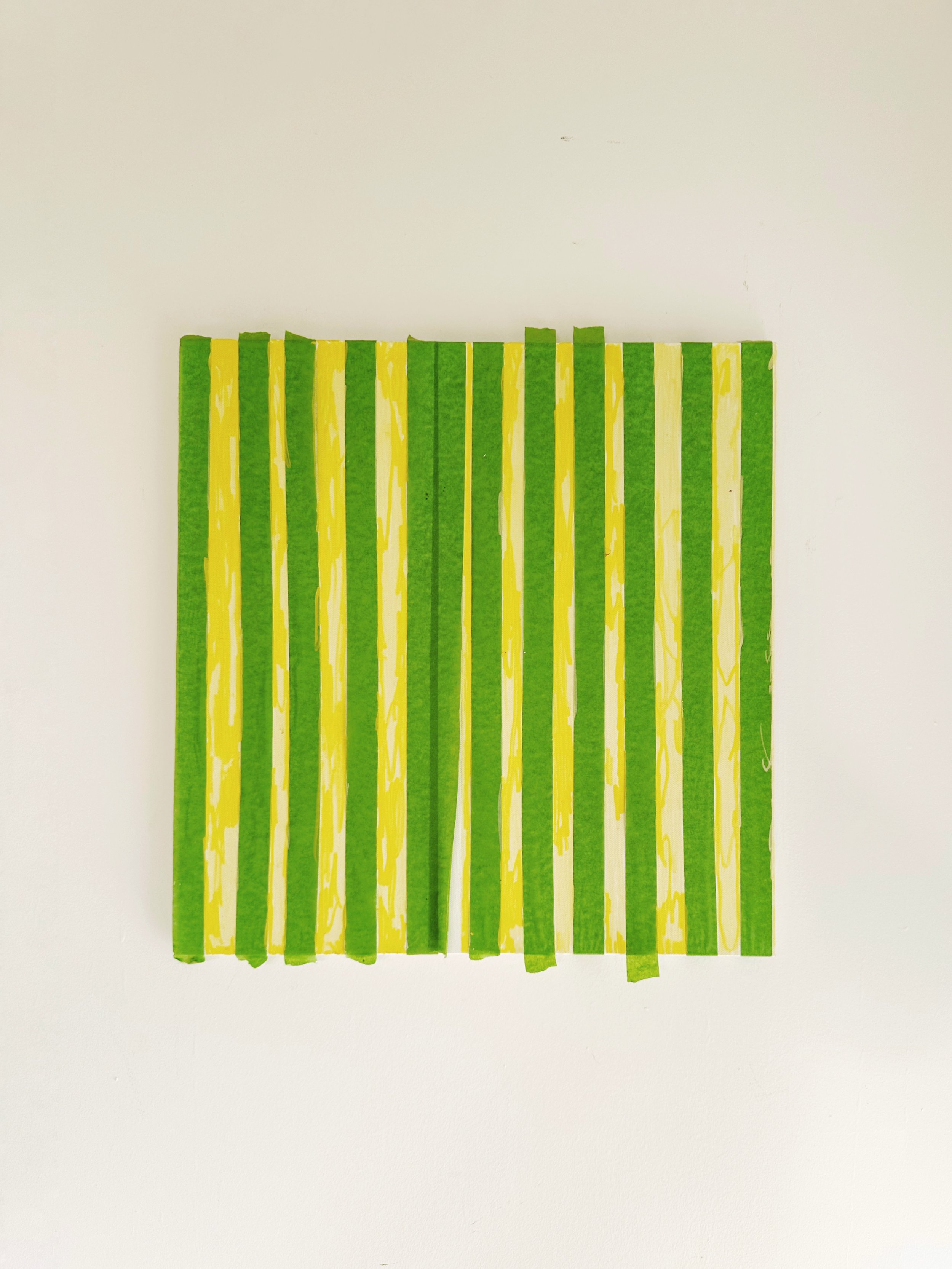
The World is Six Feet Square
2025
Robert Blodgett
Paint on reclaimed board-and-batten vinyl cladding mounted to salvaged plywood
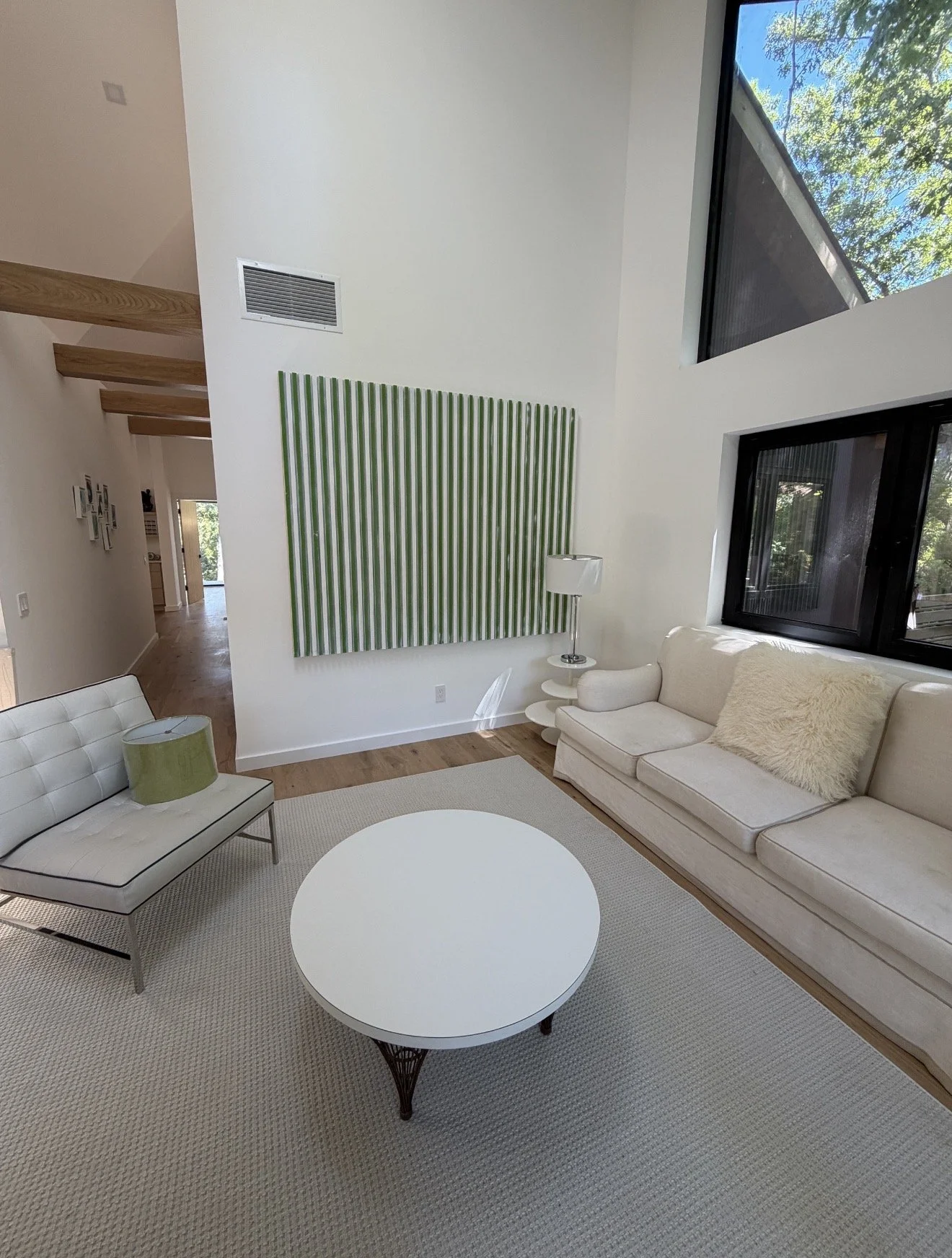
$4,600
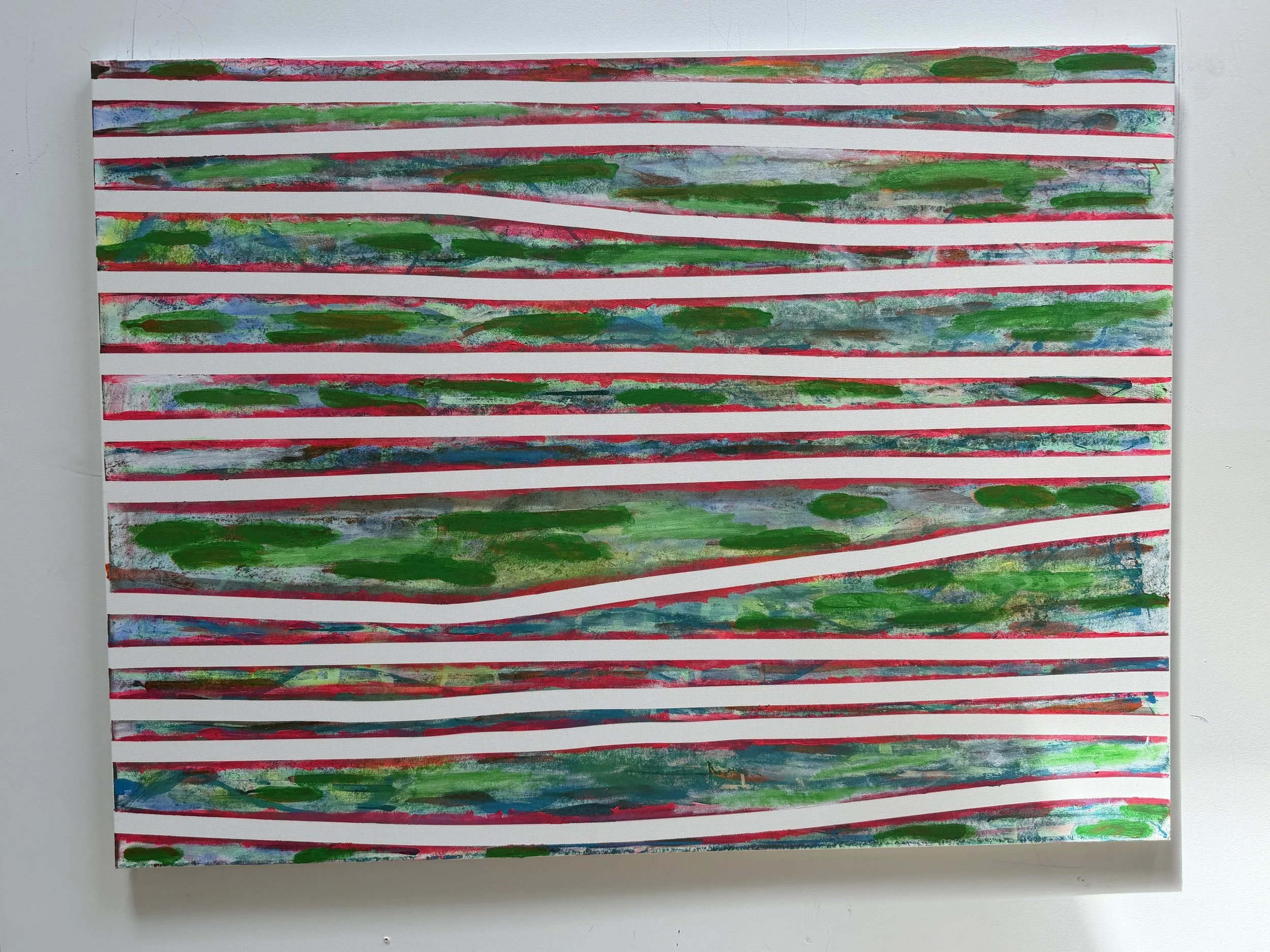
Created on an active construction site in Sag Harbor, The World is Six Feet Square transforms the material language of Hamptons construction into an object of quiet elegance and ecological reflection. The work is made entirely from salvaged building materials: a discarded section of vertical board-and-batten vinyl cladding, mounted to plywood with the assistance of the site carpenter. Its raised battens, recessed channels, and repeating shadow lines remain visible beneath the paint, allowing the construction logic of the material itself to determine the painting’s rhythm. Small traces of sawdust and job-site debris remain embedded in the surface, preserving the conditions of its making rather than concealing them.
By reclaiming vinyl siding from the construction waste stream, Blodgett situates the work within a practice of adaptive reuse, material diversion, embodied energy, and low-waste assemblage. A petrochemical building product ordinarily treated as disposable renovation debris is recontextualized as a painted surface, shifting from exterior cladding to aesthetic object. In this transformation, the work reflects the Hamptons as a place of contradiction: serene yet perpetually under construction, natural yet highly designed, a refuge from the city built through continuous cycles of demolition, renovation, and renewal.
The painting’s green and white palette evokes landscape, wealth, heritage, purity, and understated luxury, drawing on the visual codes of Hamptons domestic refinement. Green suggests prestige and permanence; white suggests coastal light, restraint, and calm. The title, borrowed from a memoir of World War II experience, gives the work a broader philosophical dimension: “the world” refers to the Hamptons as a destination, to the ecological world implicated in what we discard, and to the intimate human desire to feel at home within a bounded space. The World is Six Feet Square is therefore both a painting for the home and a painting about the making of homes — a salvaged architectural fragment transformed into an object of tranquility, reflection, and place.
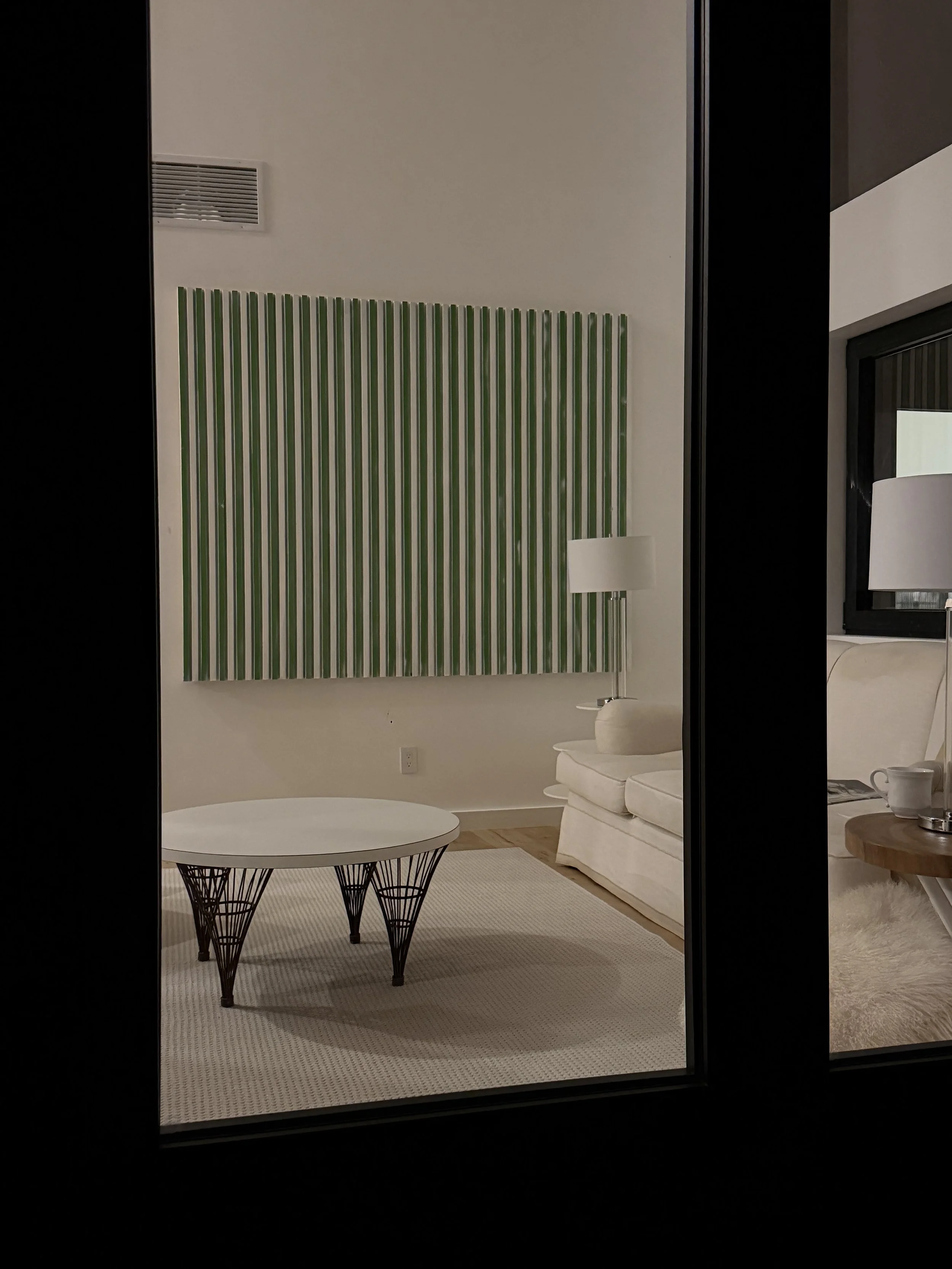
Interior view of a modern living room seen through a glass door, featuring a white sofa with a lamp behind it, a wooden side table with a teacup and a magazine, a round coffee table with a wireframe design, green and white striped wall decor, a white woven rug, a window with dark framing, and a white ceiling with a vent.

A colorful abstract painting with horizontal streaks of green, blue, red, and other colors on a white canvas, mounted on a white wall.
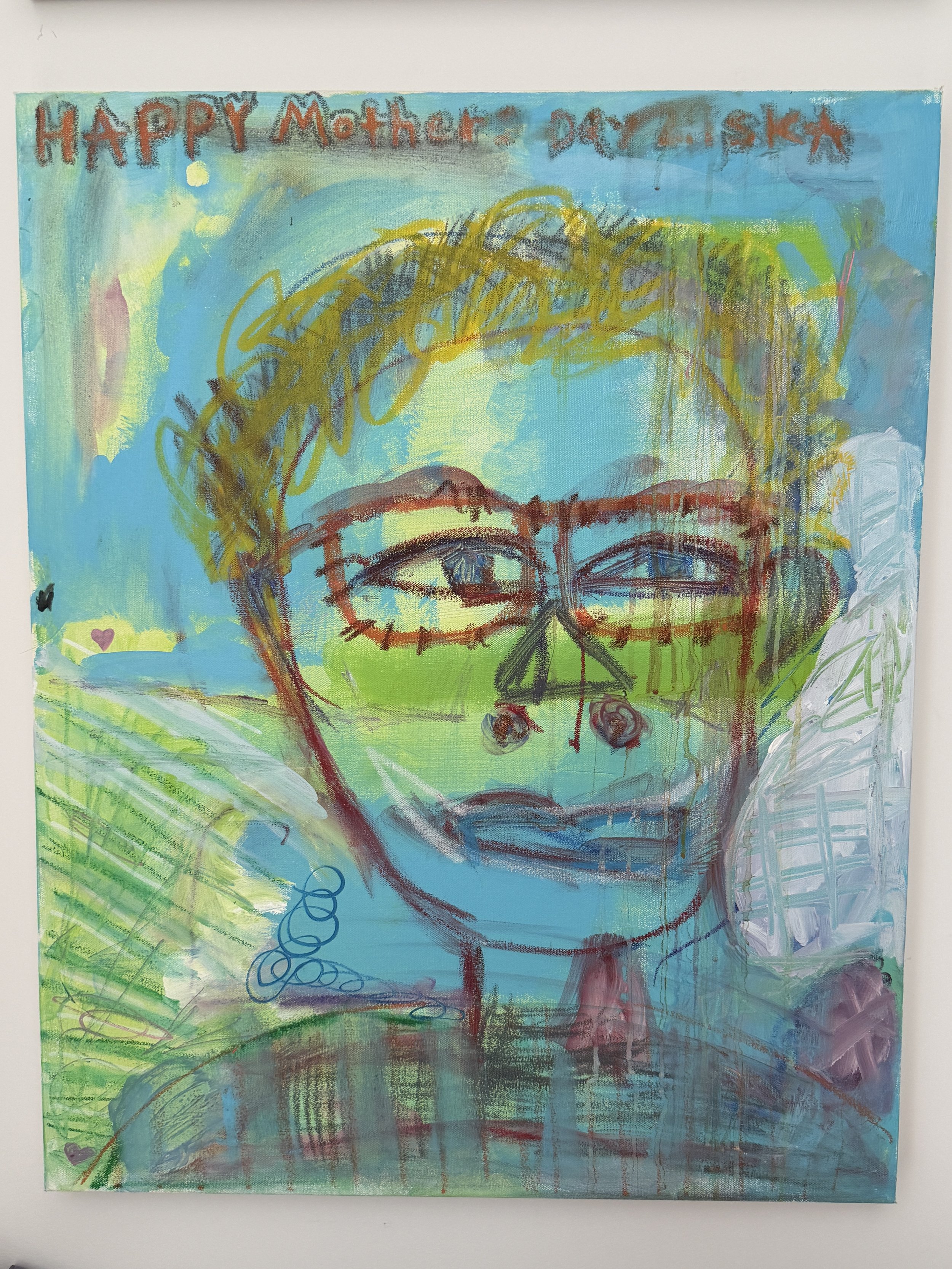
A colorful abstract painting with a blue background, featuring a large face with glasses, surrounded by scribbles and shapes, with the words "Happy Mother" written at the top.
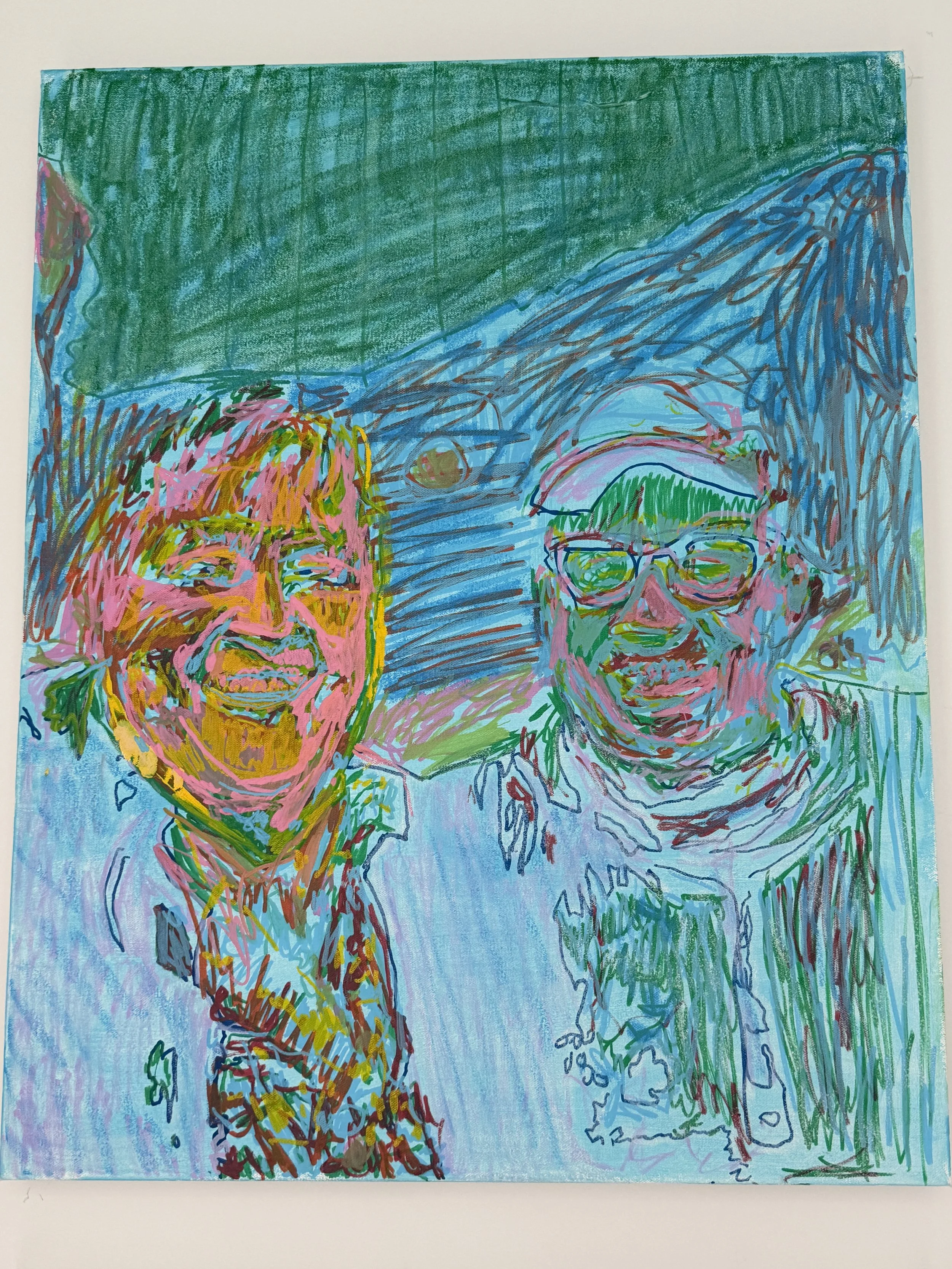
Colorful, abstract drawing of two faces, one with glasses and the other with an afro hairstyle, against a multicolored background.
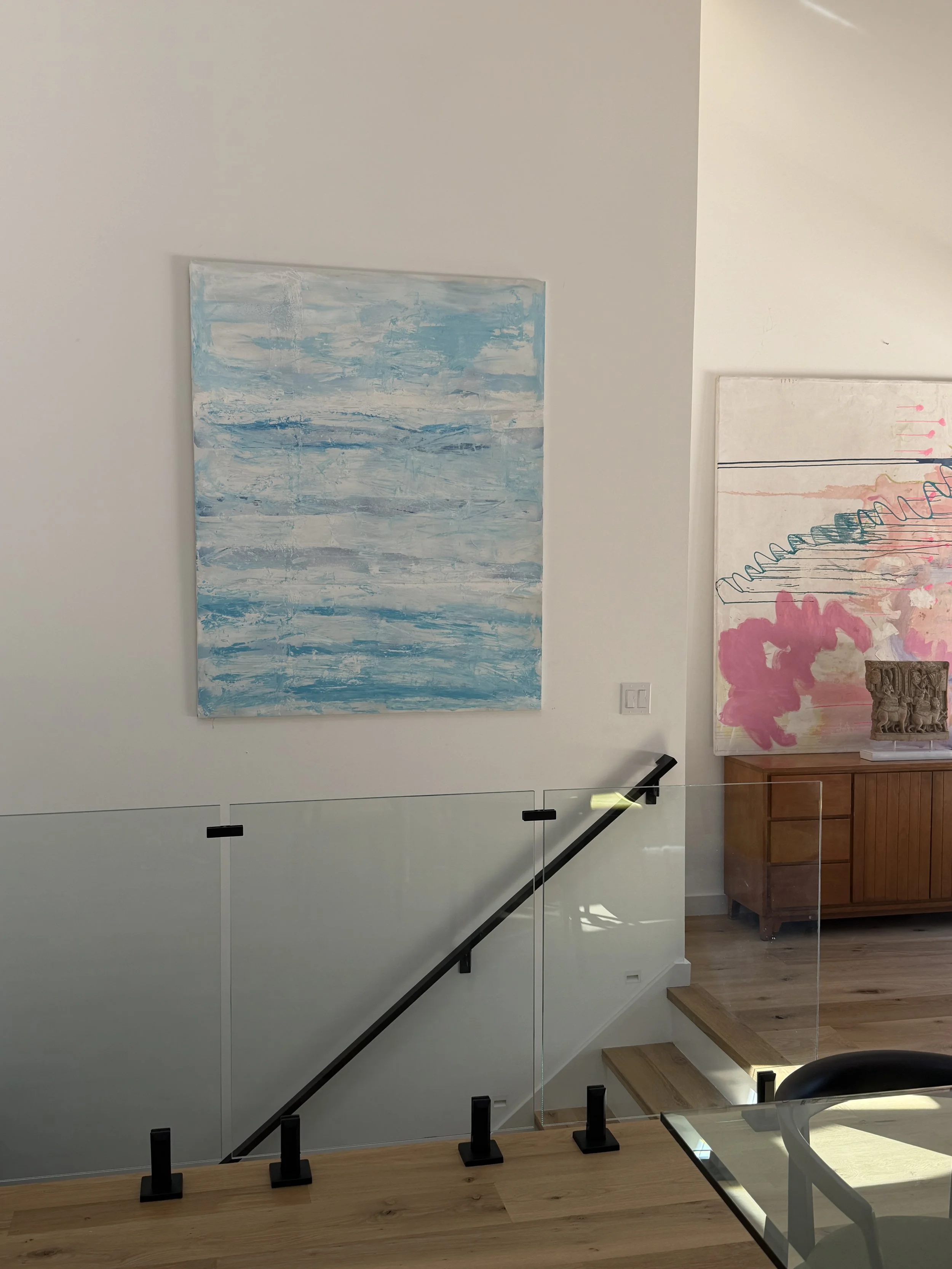
Photo of an art gallery wall with two paintings. The left painting features abstract blue and white brushstrokes, while the right painting shows abstract pink and black lines and shapes.
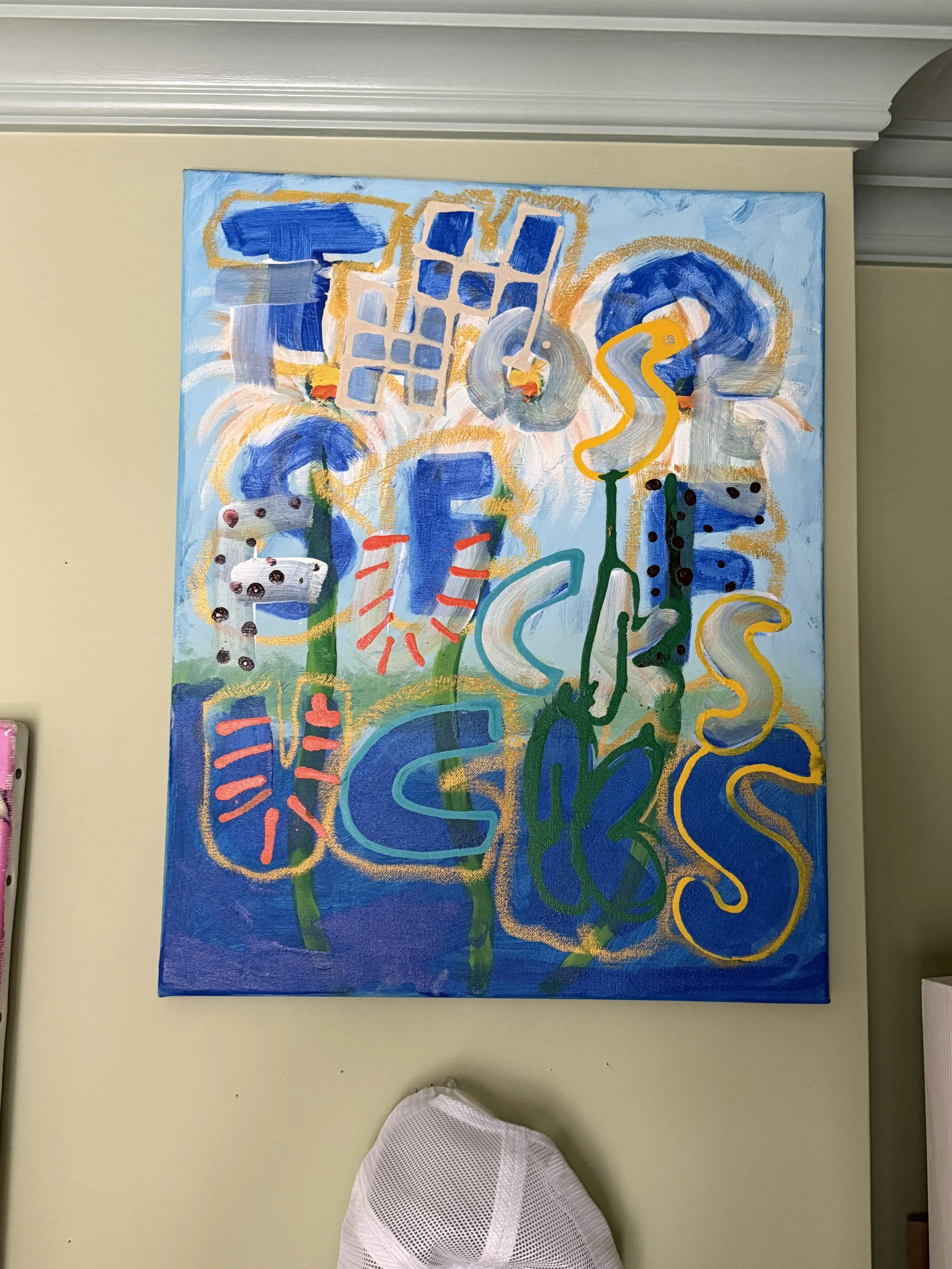
An abstract painting on a wall with vibrant blue, white, yellow, red, and green colors forming various shapes and patterns.
Colorful abstract painting with large patches of blue, green, orange, and blush, with the words 'NEPAL' and 'MAY' faintly visible in the background, on a black canvas.
An abstract painting of a lemon with yellow and blue outlines, featuring the words "Good Meaning to Change" written in the center.
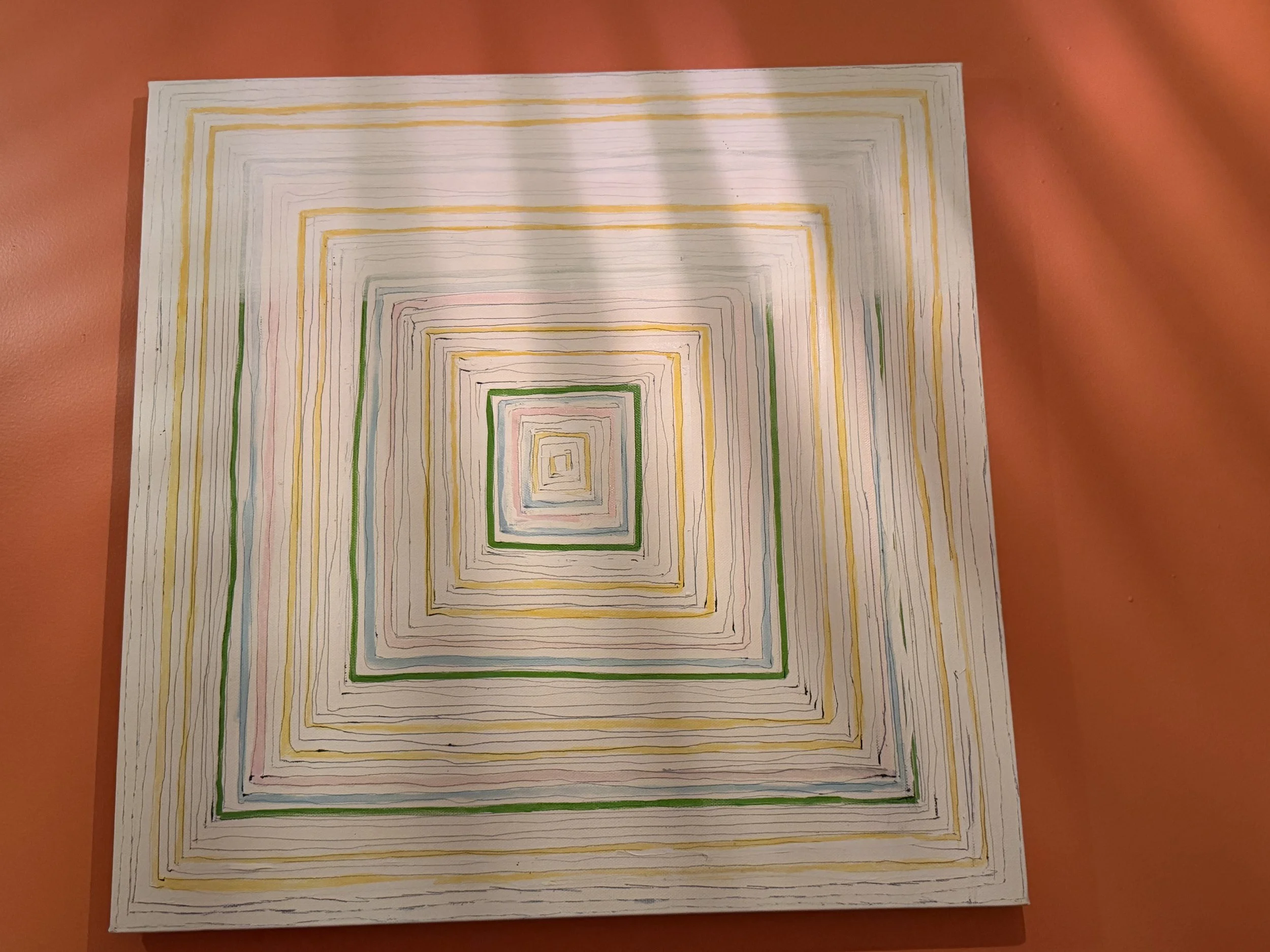
A sheet of paper with colorful squares outline, including pink, yellow, green, and black, arranged in a recursive pattern, placed on an orange surface.
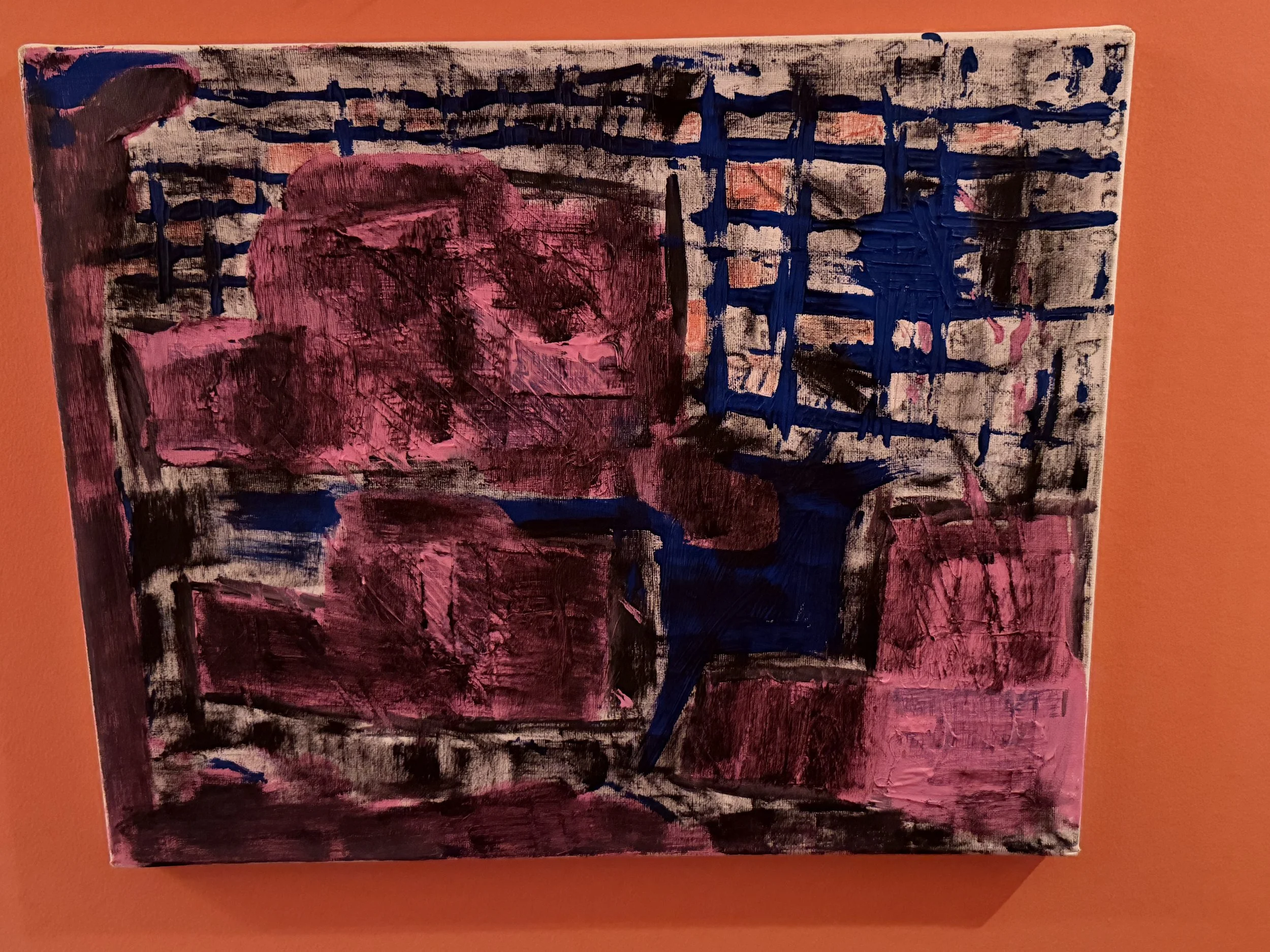
An abstract painting with pink, black, and blue brushstrokes on a canvas hanging on an orange wall.
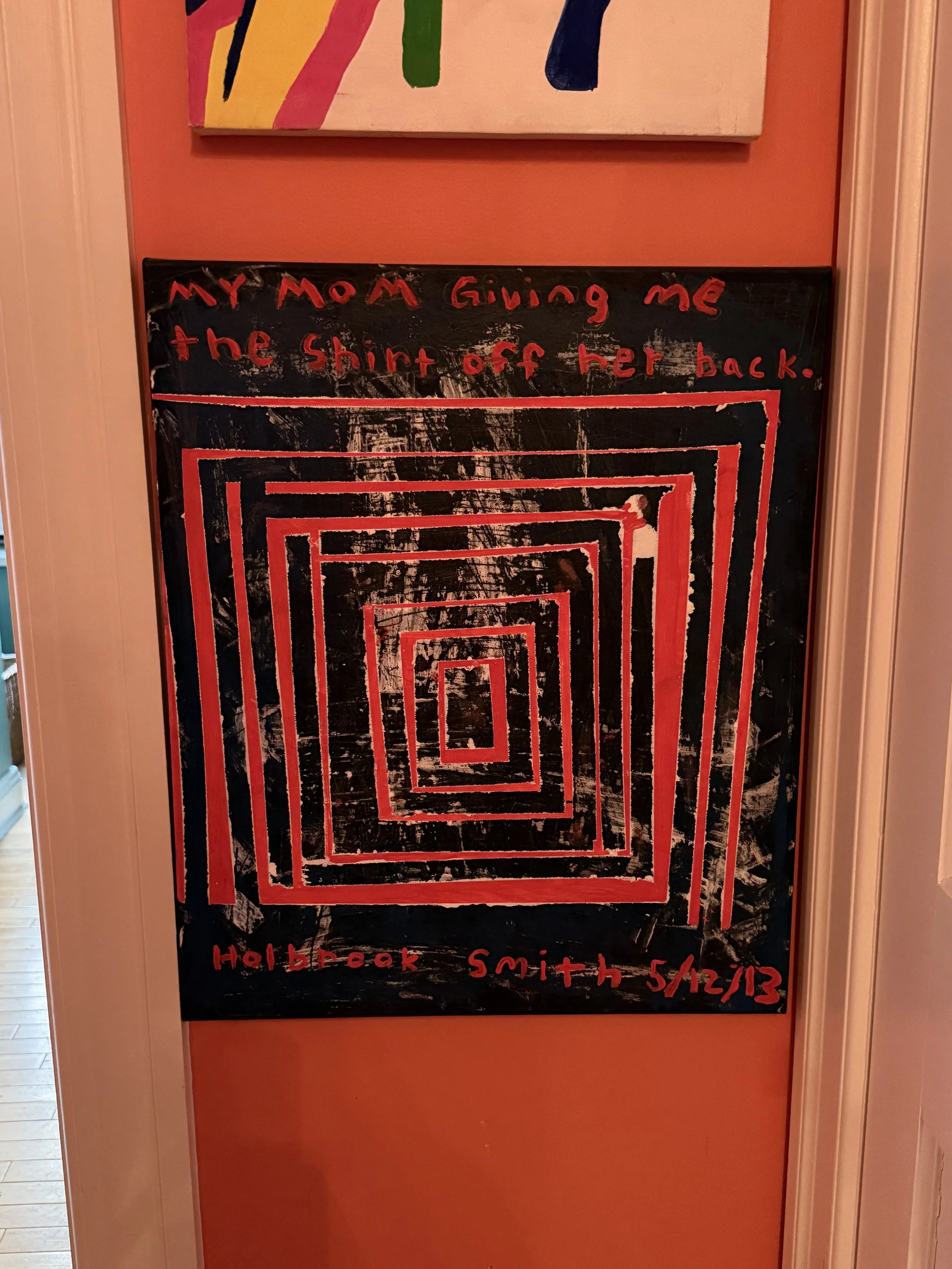
A black chalkboard-style sign with red and white border, orange handwritten text that reads 'My Mom Giving me the shirt off her back.' and signature at the bottom in red that reads 'Hollbrook Smith 5/26/13'.
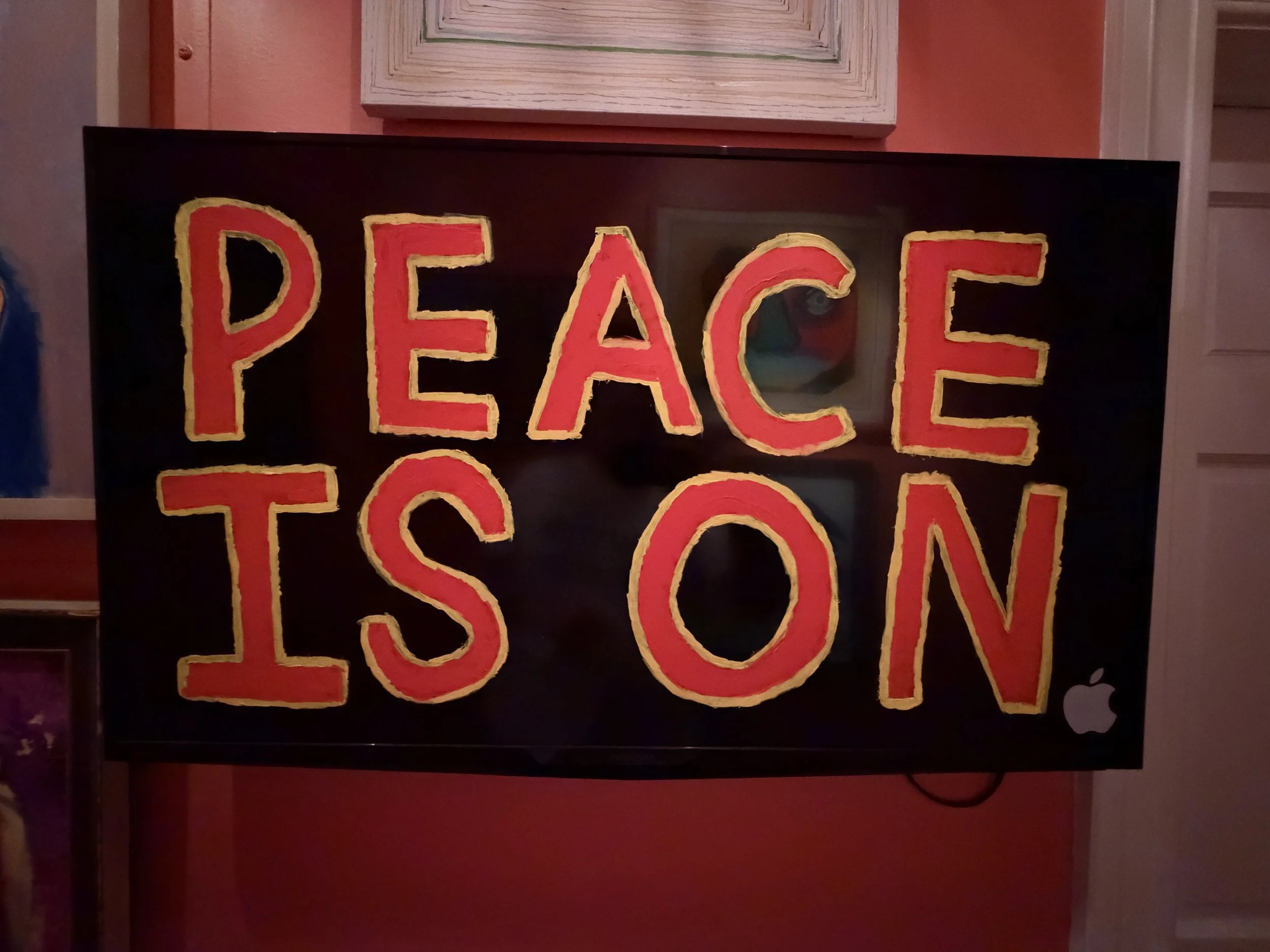
A black sign with red and yellow hand-painted letters spelling out 'PEACE' and other words, hanging on a red wall.
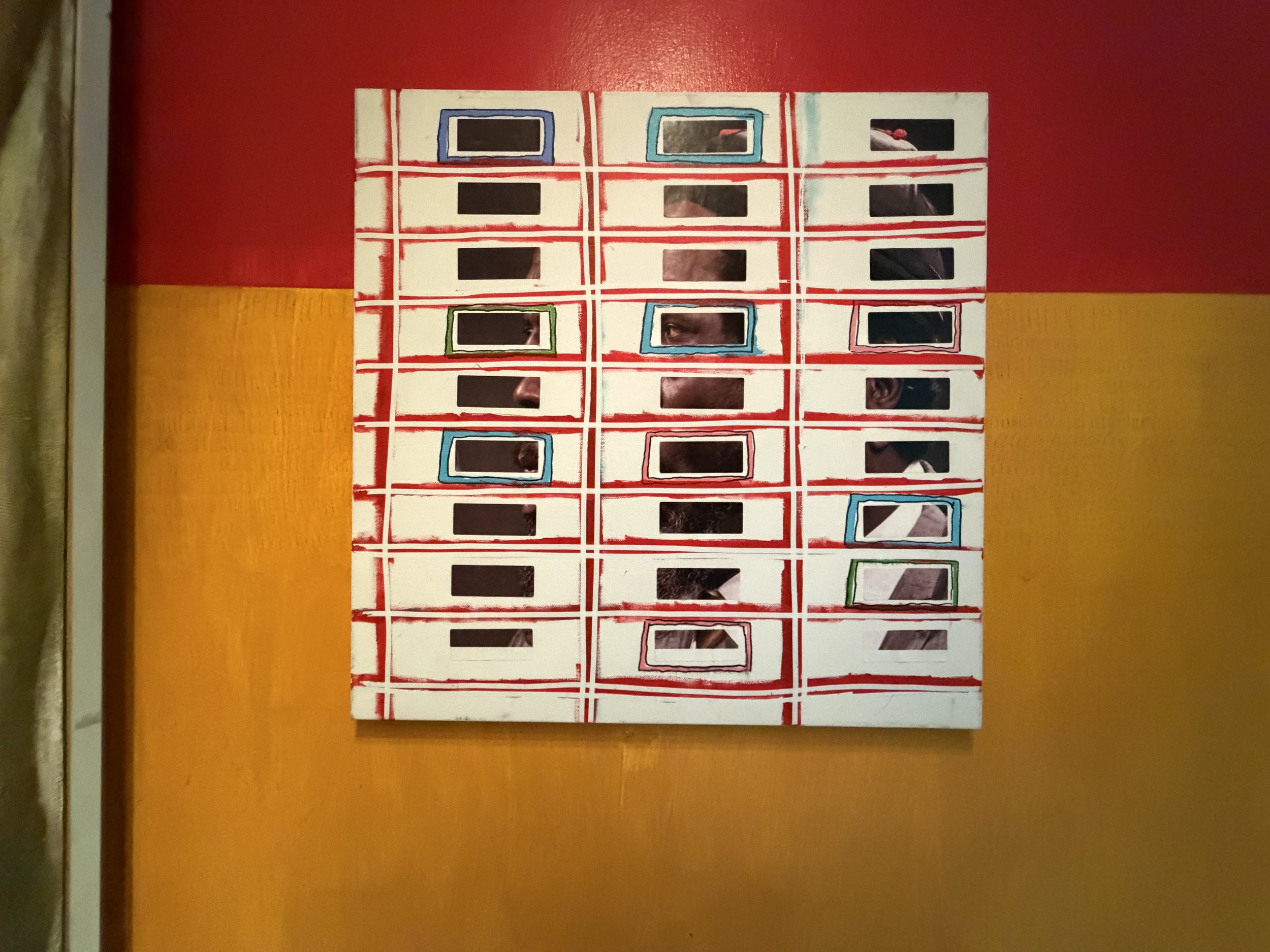
A homemade tic-tac-toe game made from paper, with red, blue, and green marker outlines, set on a wooden surface against a red and yellow background.
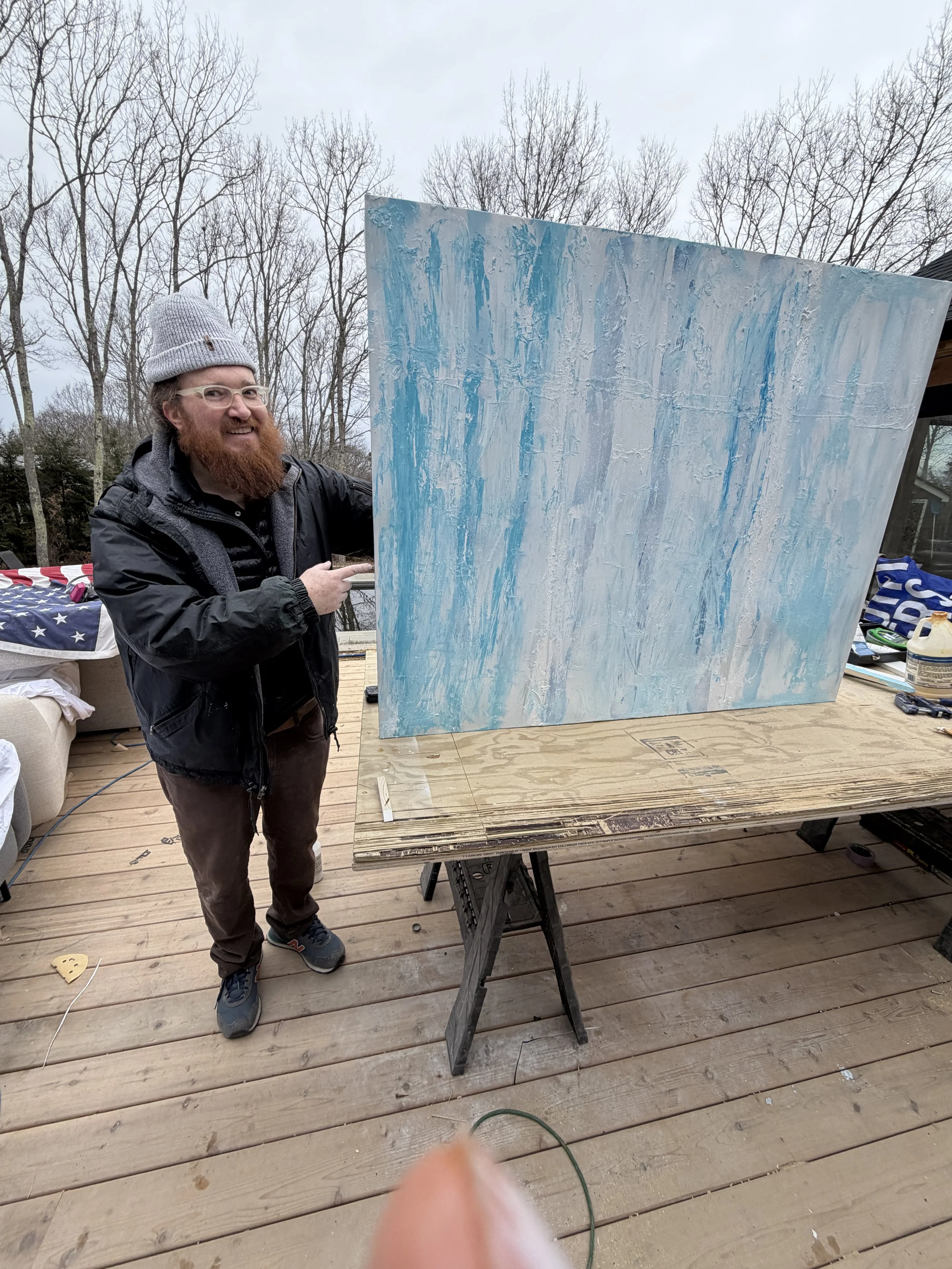
A man with glasses and a red beard, wearing a gray beanie and black jacket, is smiling and pointing at a large abstract blue and white painting on an easel outdoors on a wooden deck. The background features leafless trees and a cloudy sky.
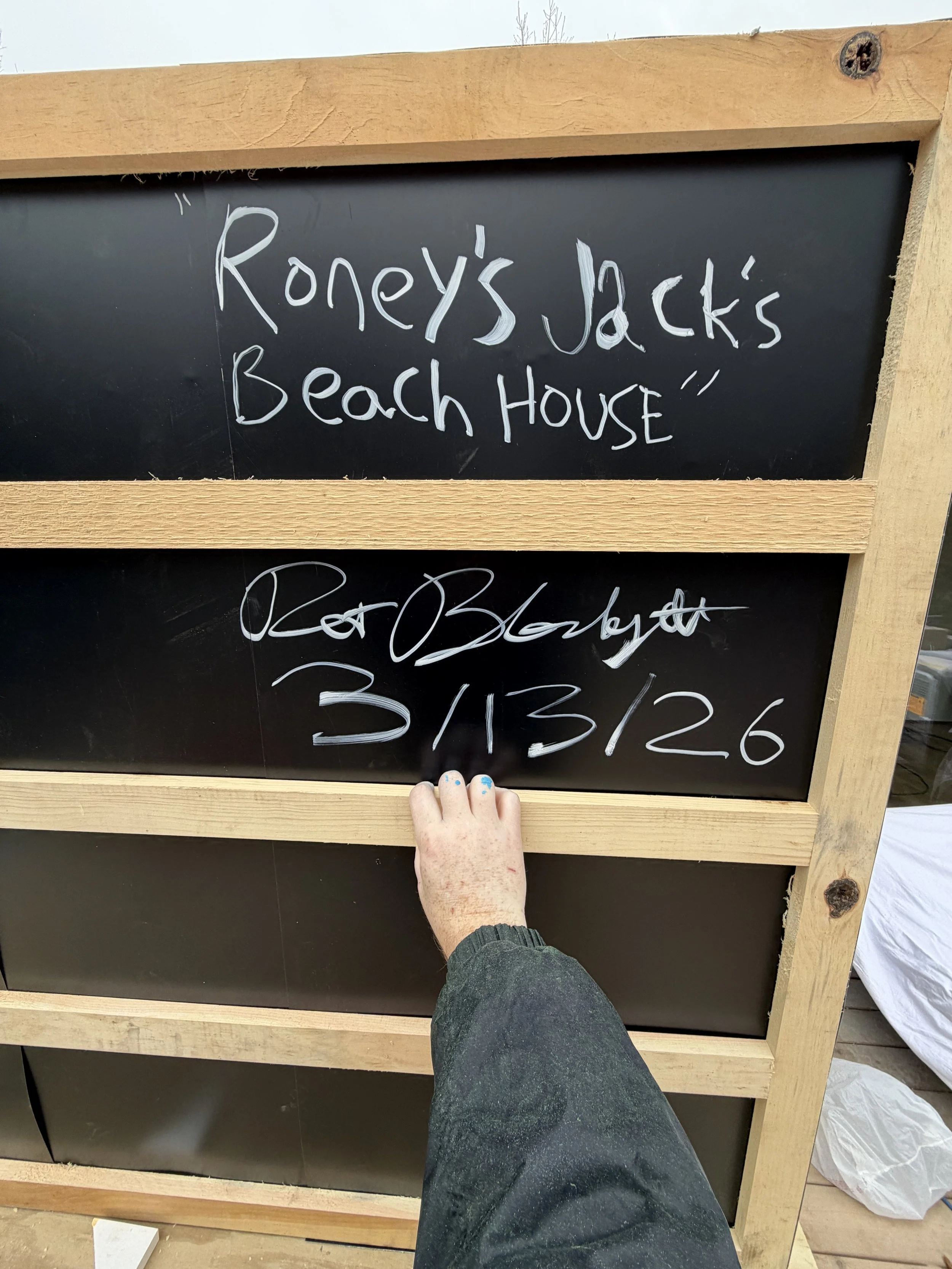
A black chalkboard sign with wooden framing. The top part reads 'Roney's Jack's Beach House' in white handwritten letters. The person holding the sign is wearing a black sleeve, and their hand is visible at the bottom, showing a person with fair skin and painted nails.

"Untitled" January 2025 Acrylic on Canvas 24x36" Miami Beach

"Untitled"* 2025 Acrylic on Canvas 12x18" *Unfinished Progression Miami Beach

Self Portrait with Daphne 4x5' Acrylic on Canvas 2024

An abstract painting with a blue background and a yellow grid-like pattern outlined with red lines.

Acrylic on Canvas 4'x'5' Untitled Miami Beach April 2024
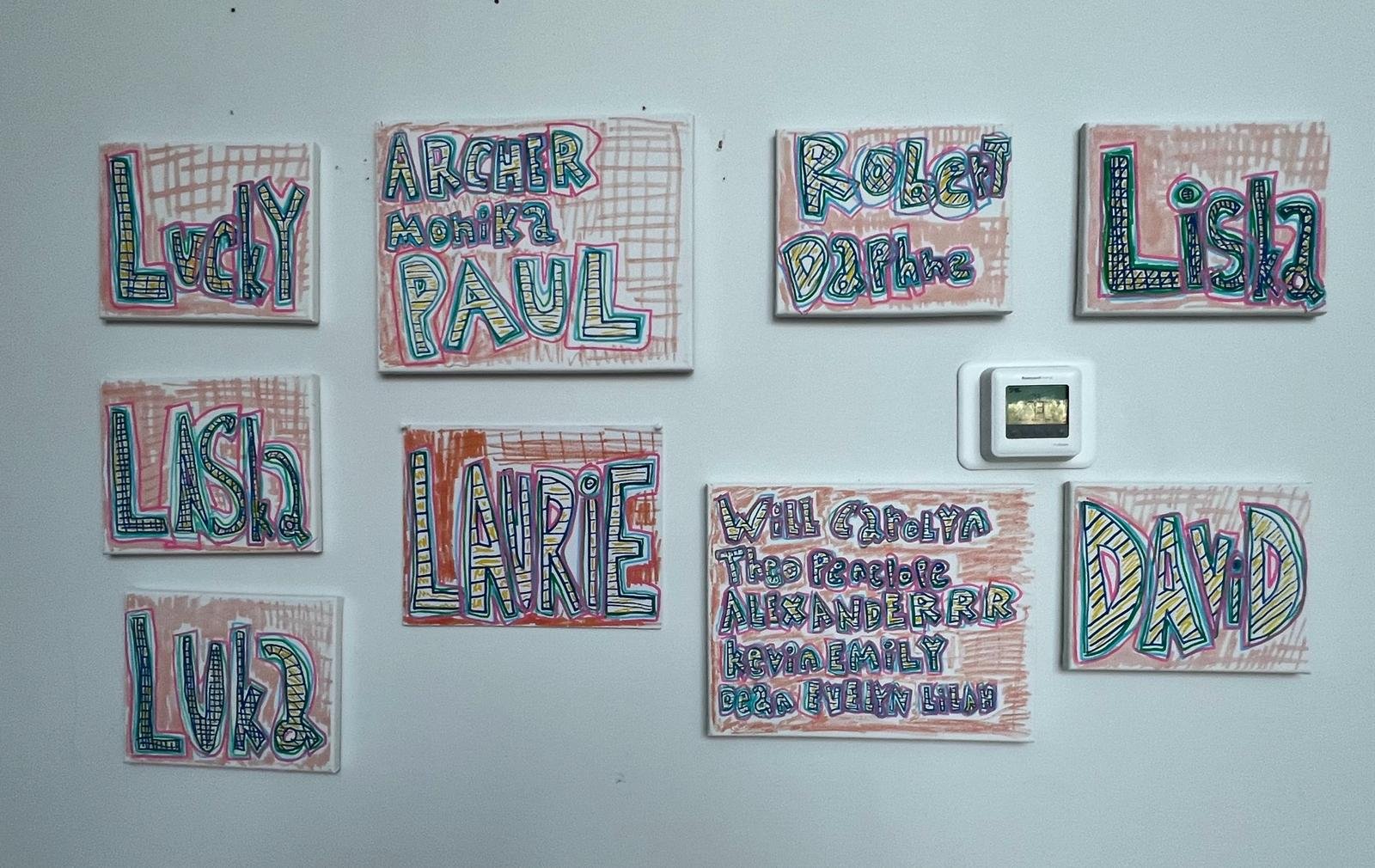
Colorful hand-drawn art pieces with names on a white wall, including Lucy, Archer, Monika, Paul, Robert, Darla, Lasha, Lane, Lily, Lara, and David, each with decorative lettering and backgrounds.
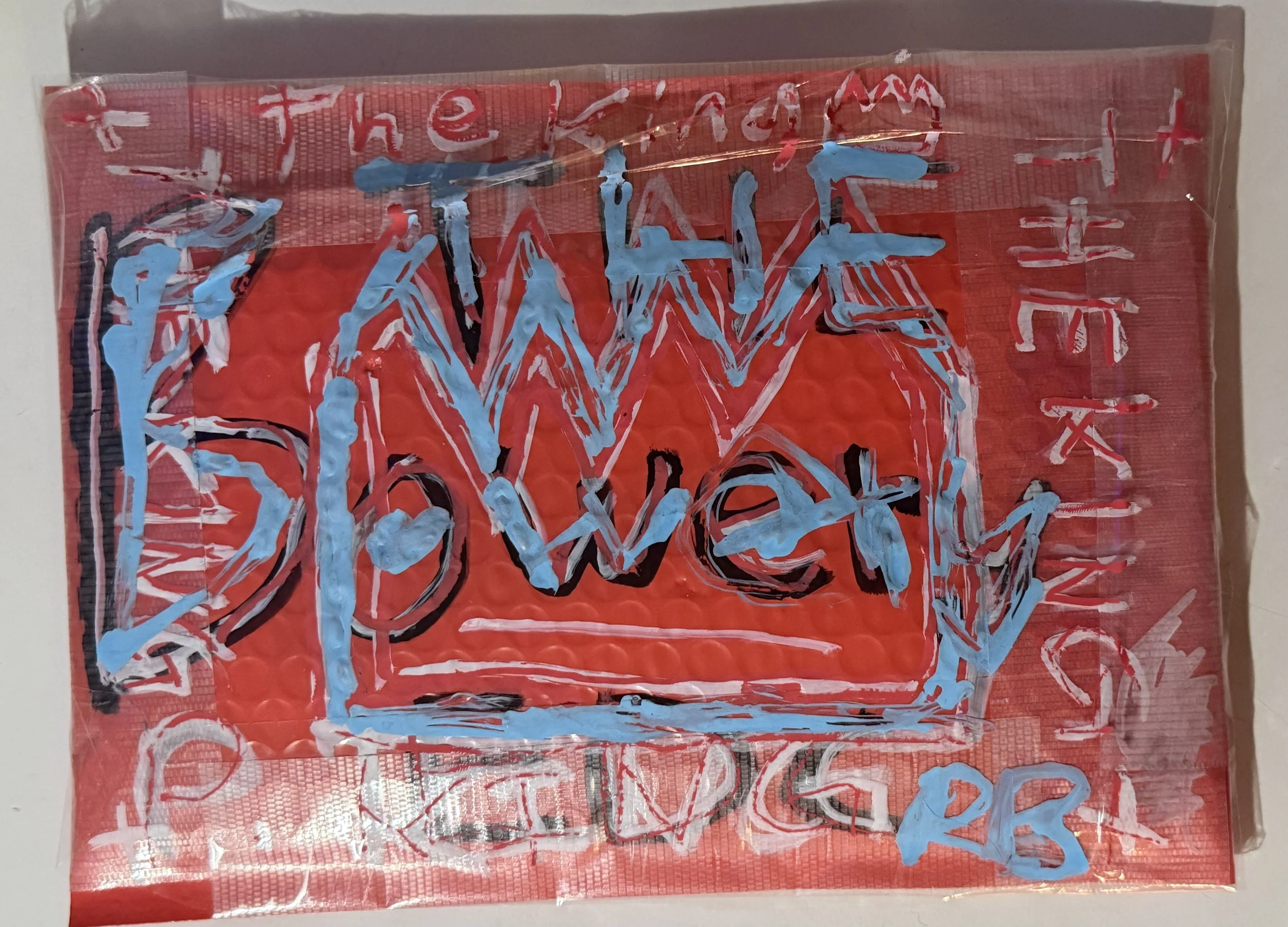
Abstract mixed media artwork on a red background with blue, black, and white paint strokes and writing.

Abstract painting with layered strokes of orange, green, purple, pink, and black paint creating a textured and colorful composition.
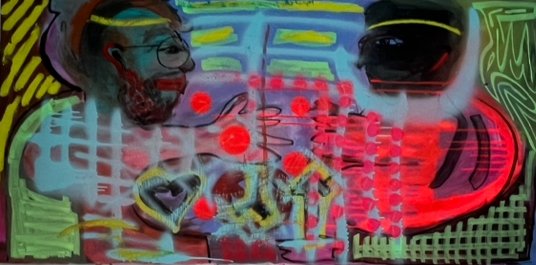
Untitled Collaboration with Maggie Galloway 24x36" Mixed Media on Canvas Miami Beach 2023
2021
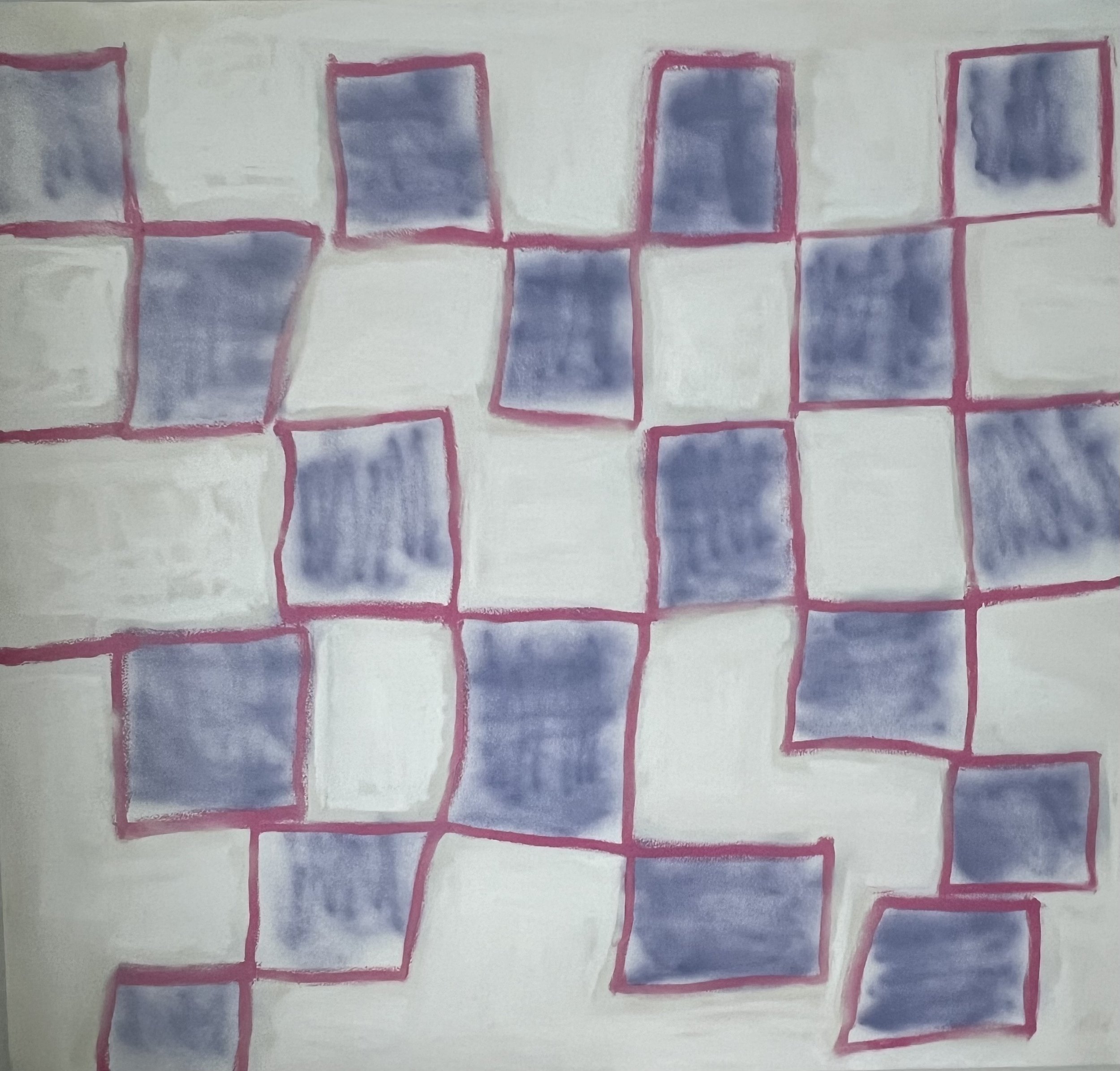
A grid of 16 squares outlined in red. The squares are filled with shades of dark blue and purple watercolor, creating an abstract pattern on white paper.
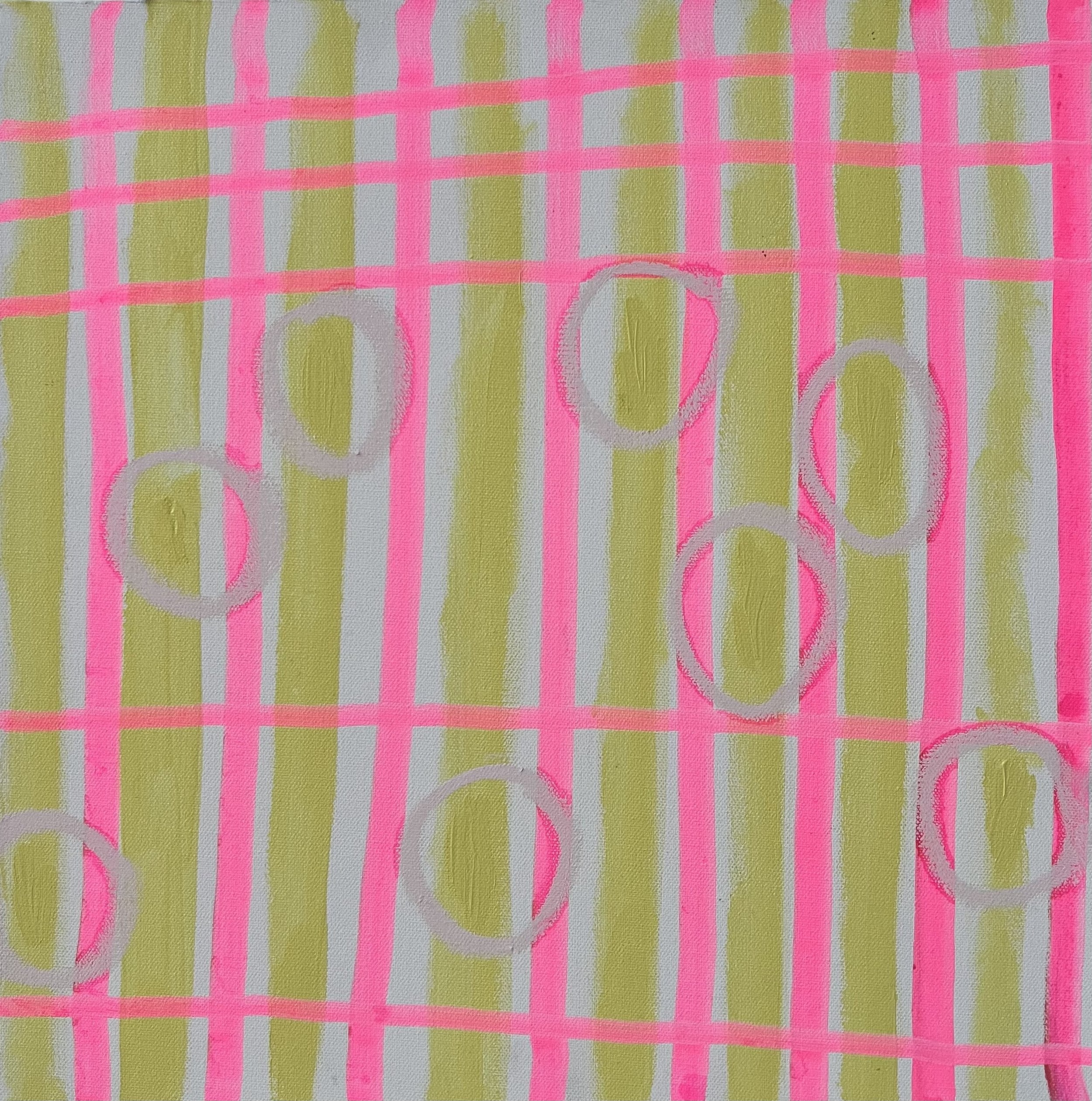
Close-up of a fabric with a grid pattern in pink and olive green, featuring some faint, handwritten-text overlays.
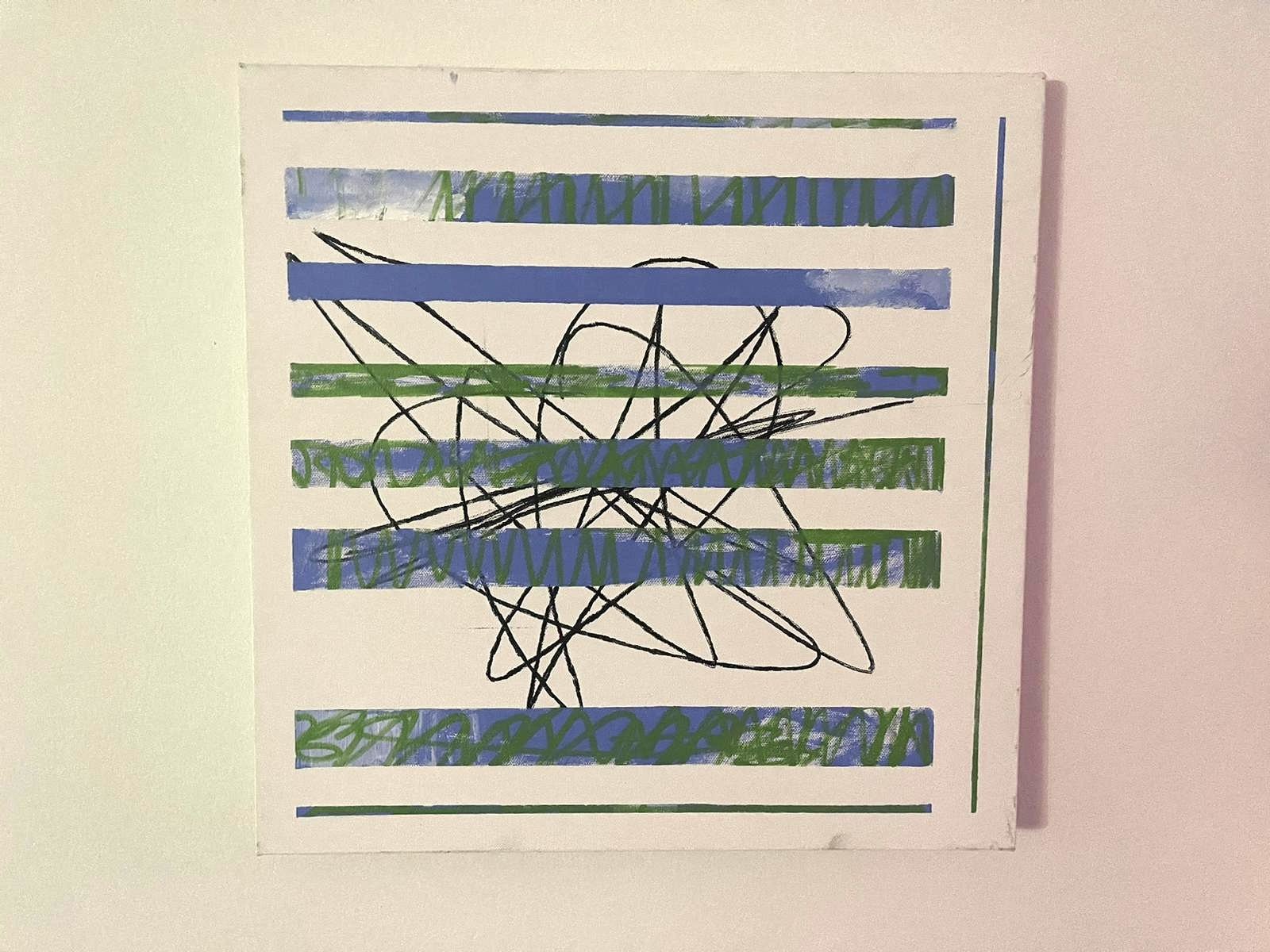
Acrylic on canvas 18x18 Inches
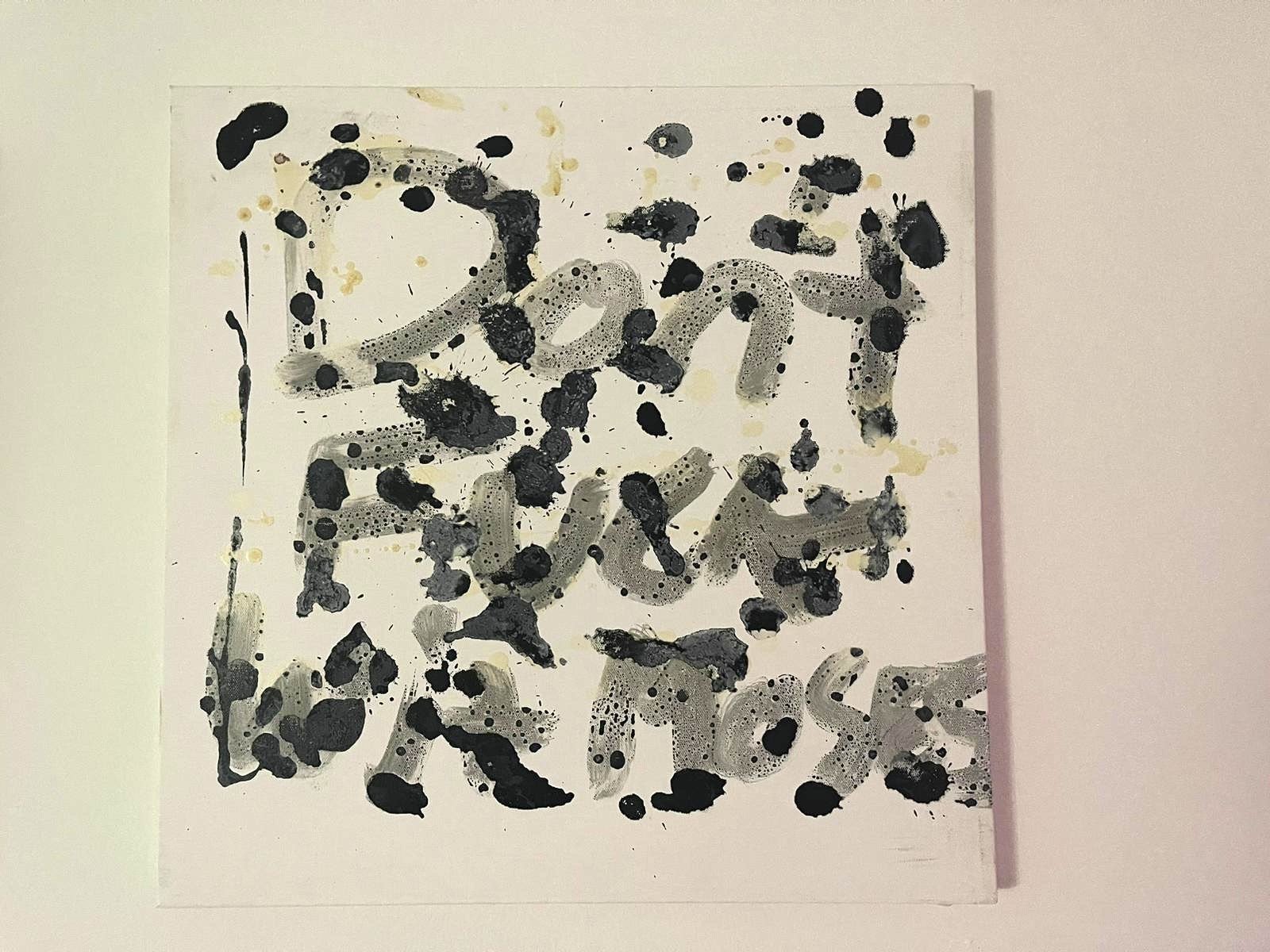
pigments on canvas
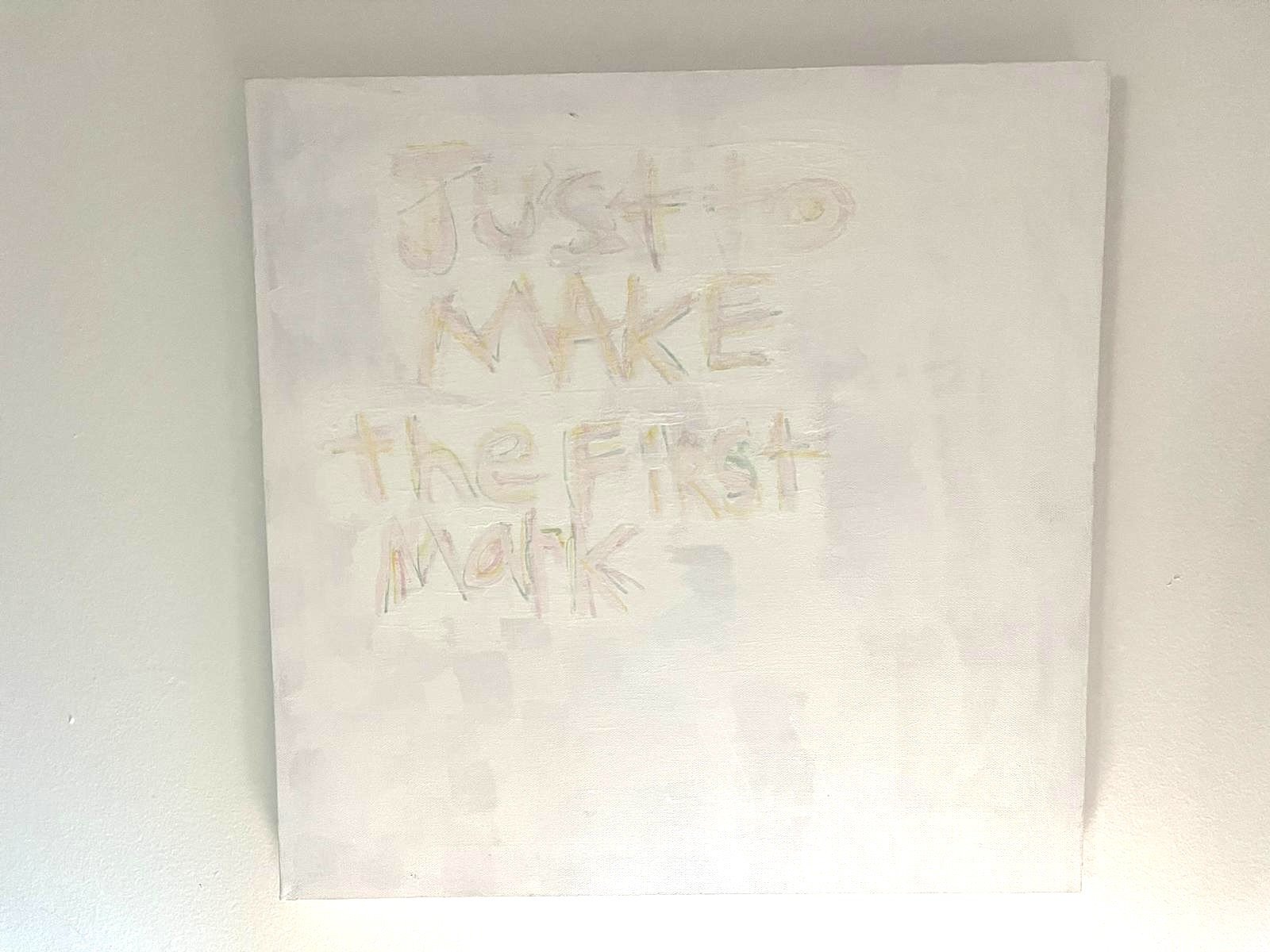
Acrylic on canvas 18x18 Inches

Abstract painted artwork with blue grid and circle shapes over a multicolored background of red, pink, blue, green, black, and white.
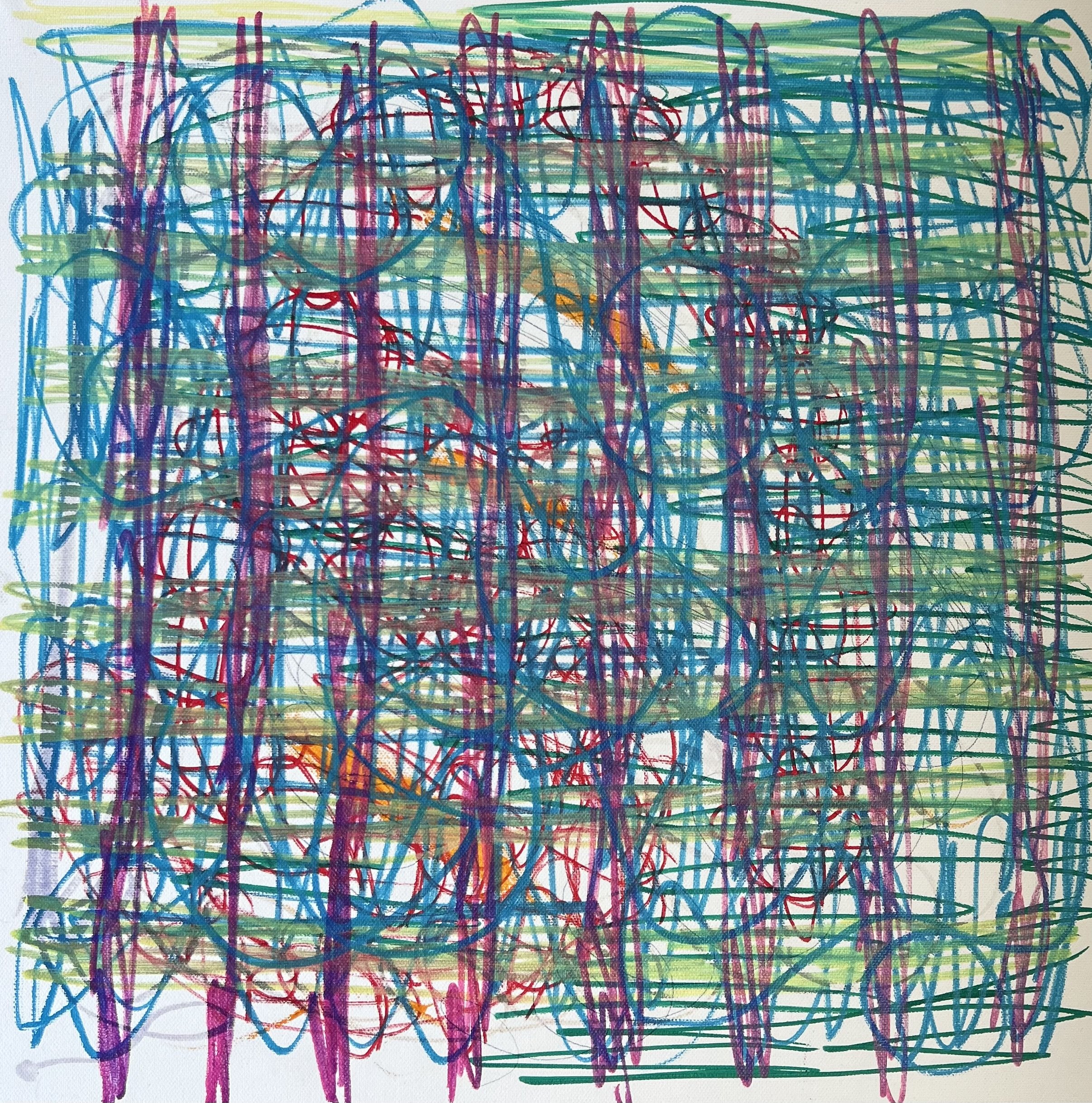
Colorful abstract drawing with overlapping scribbles in blue, green, red, purple, and orange on white paper.

Abstract colorful painting with various shades of pink, red, blue, green, yellow, black, and white, featuring a grid-like pattern with thick black and green lines overlapping and intersecting in a chaotic design.

Close-up of colorful geometric graffiti art featuring red, pink, blue, yellow, white, and black shapes and patterns on a wall.
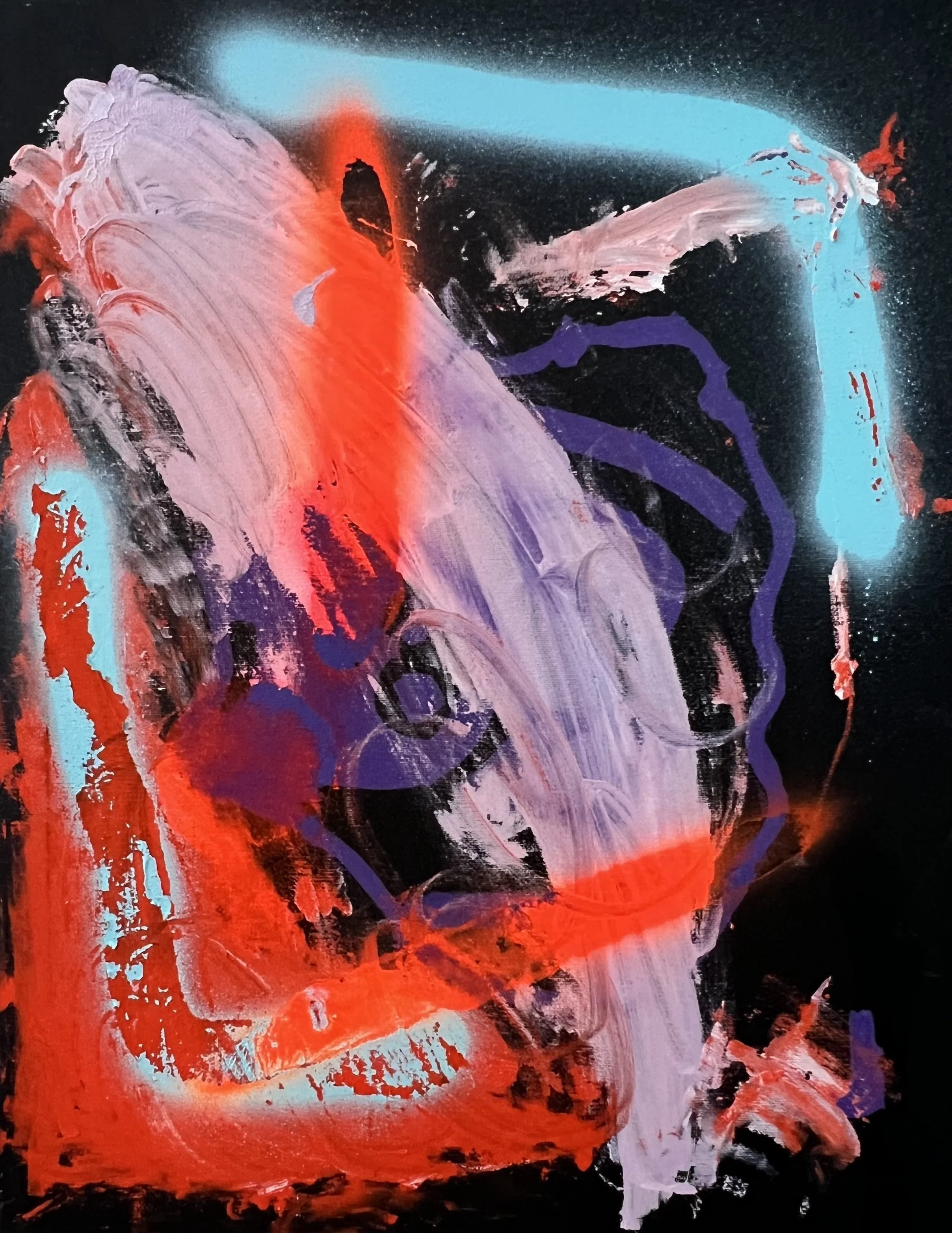
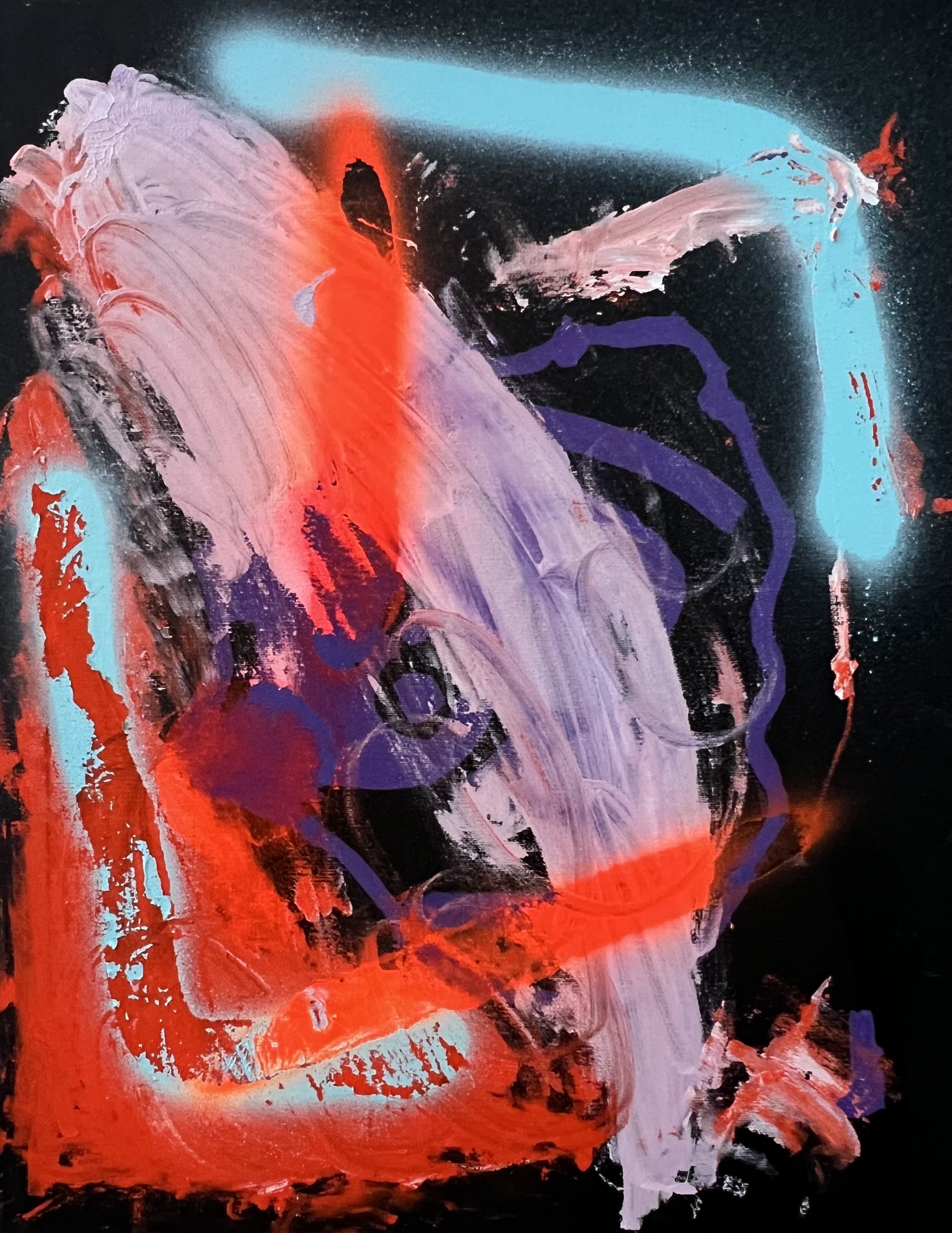
An abstract painting with bold brushstrokes in red, purple, light blue, and black colors.
"untitled" summer 2017 Mixed Media on Canvas Harlem
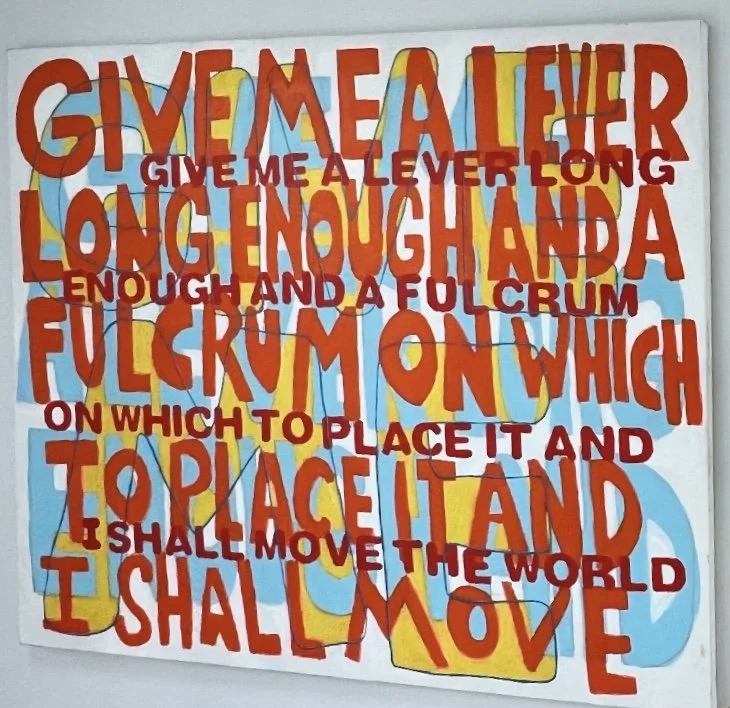
Colorful handwritten quote art with red, yellow, and blue lettering on a white background. The quote reads: 'Give me a lever long enough and a fulcrum on which to place it and I shall move the world.'

2016 I took this into my philosophy and I took notes for an hour. And then I hung it up in my kitchen above my rice cooker. The steam from the rice faded the writing so you couldn't read it.
"Untitled" 2021 Worn Canvas 2"x2" NYC
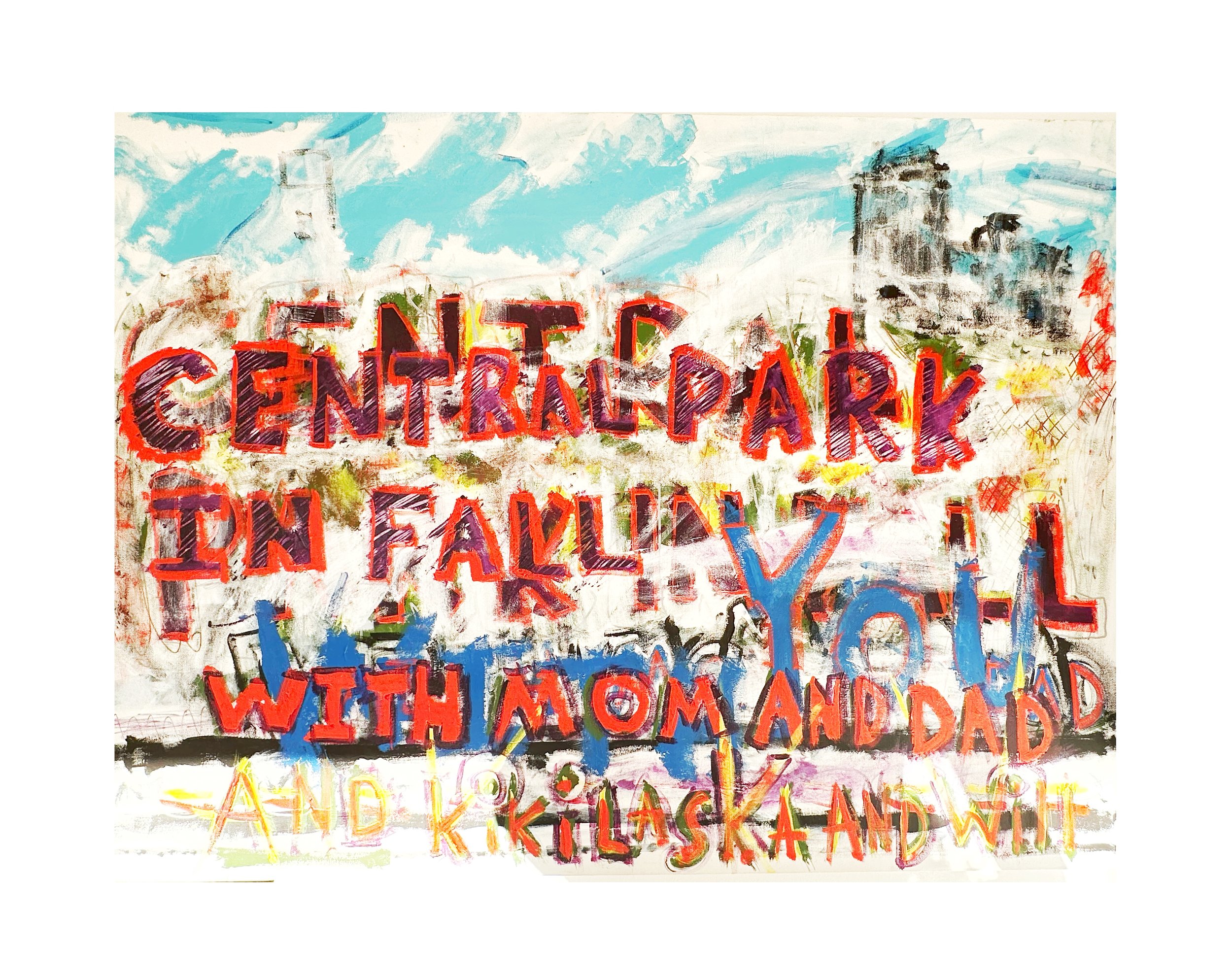
2017

2021 Collaboration with Maria Elvira Deppia
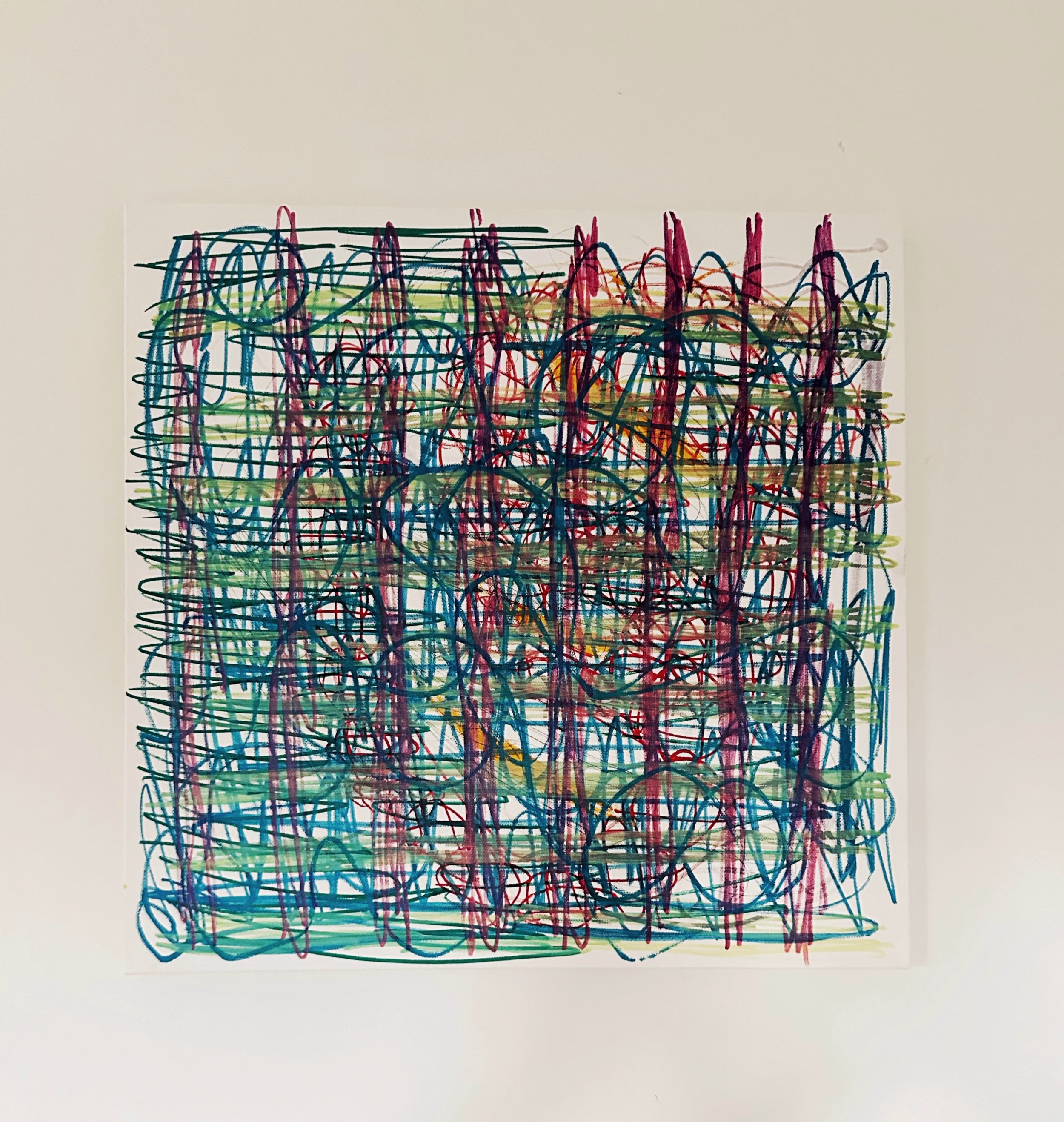
Colorful abstract drawing with numerous intertwined lines in blue, green, red, yellow, and purple on white paper.
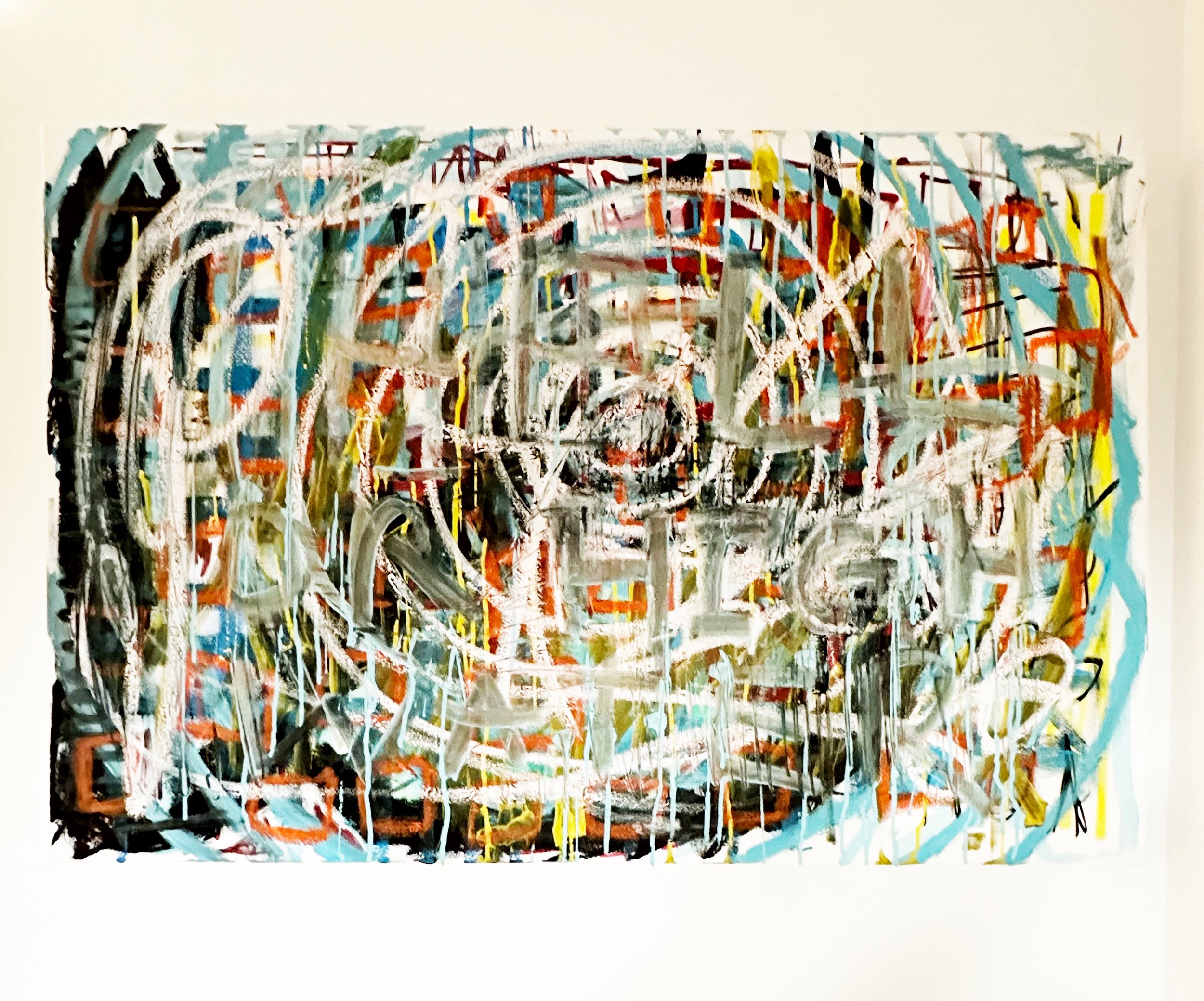
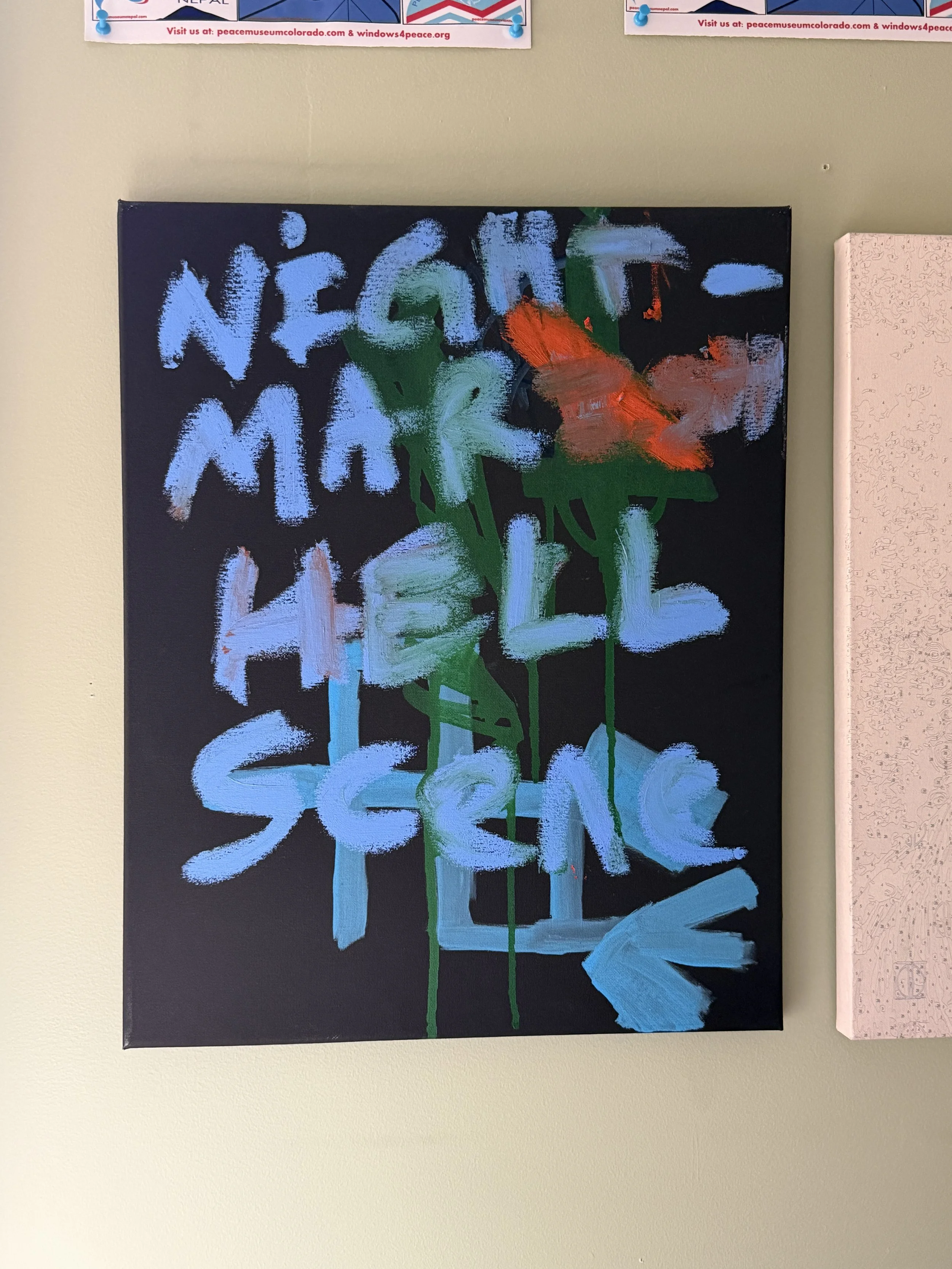
"HELL OR HIGH WATER" 2020
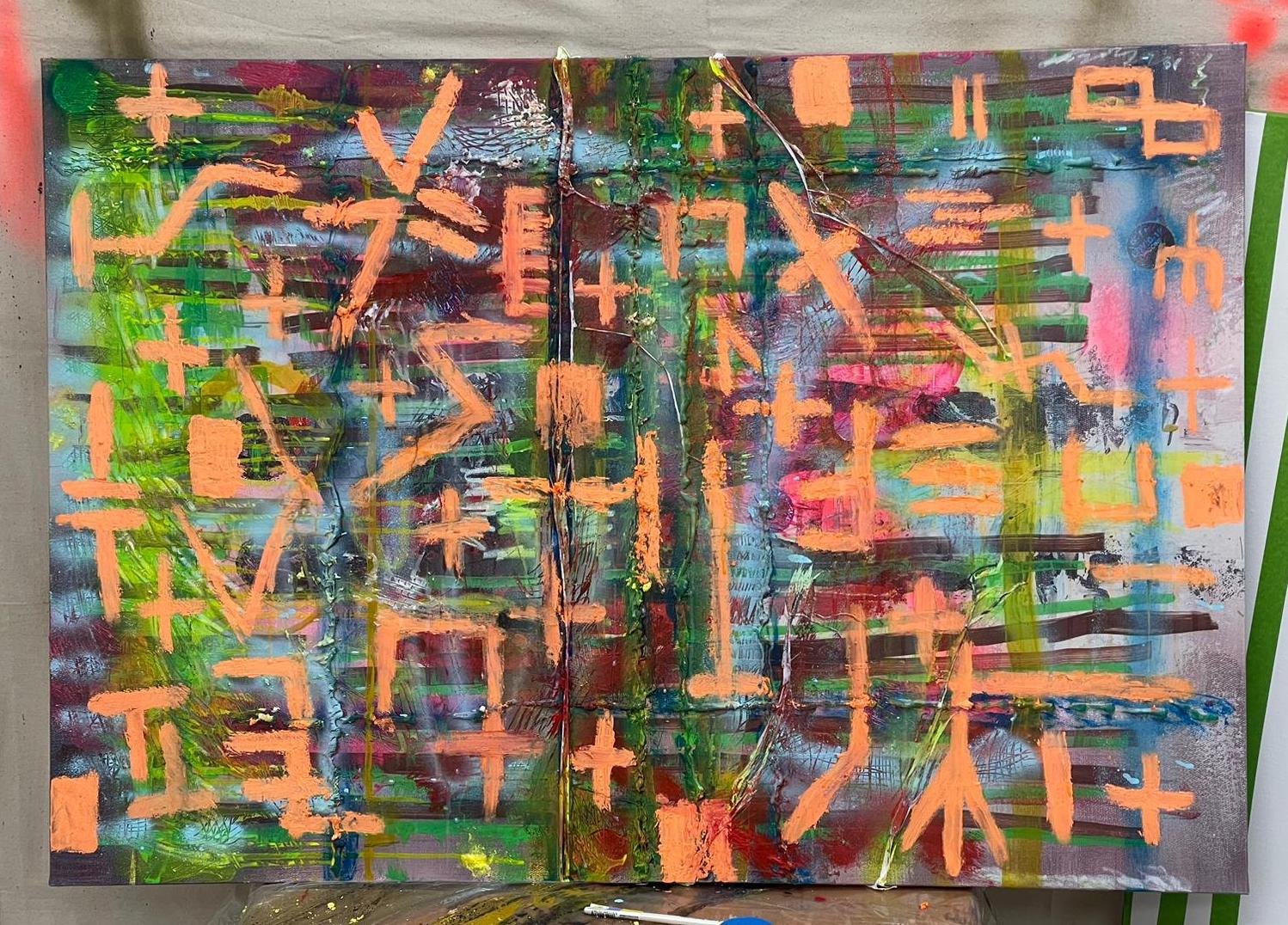
An abstract colorful painting with bright orange writing and numerous mathematical symbols and equations on a multicolored background.
Untitled Quadriptych Acrylic on Canvas Harlem 2021
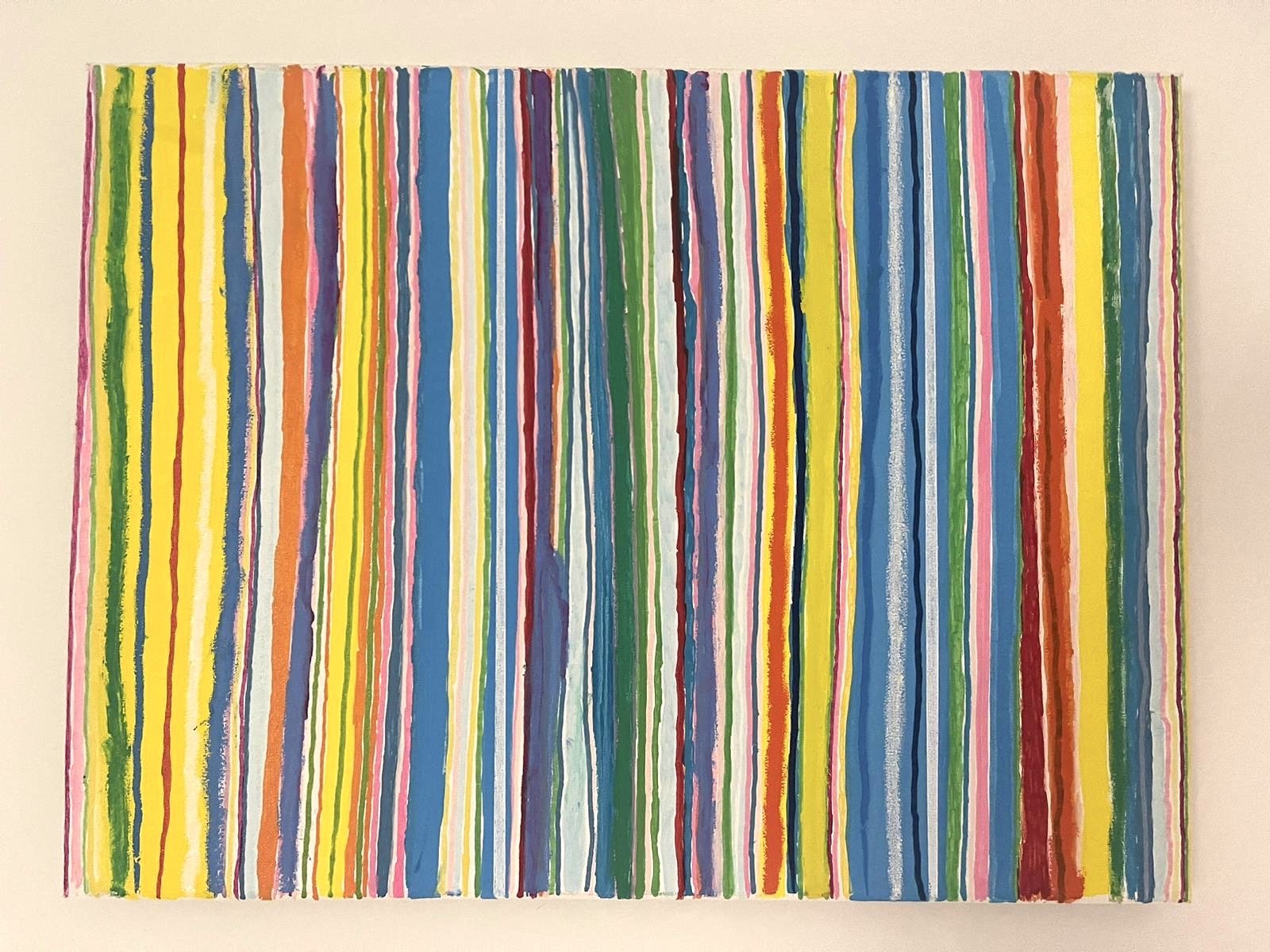
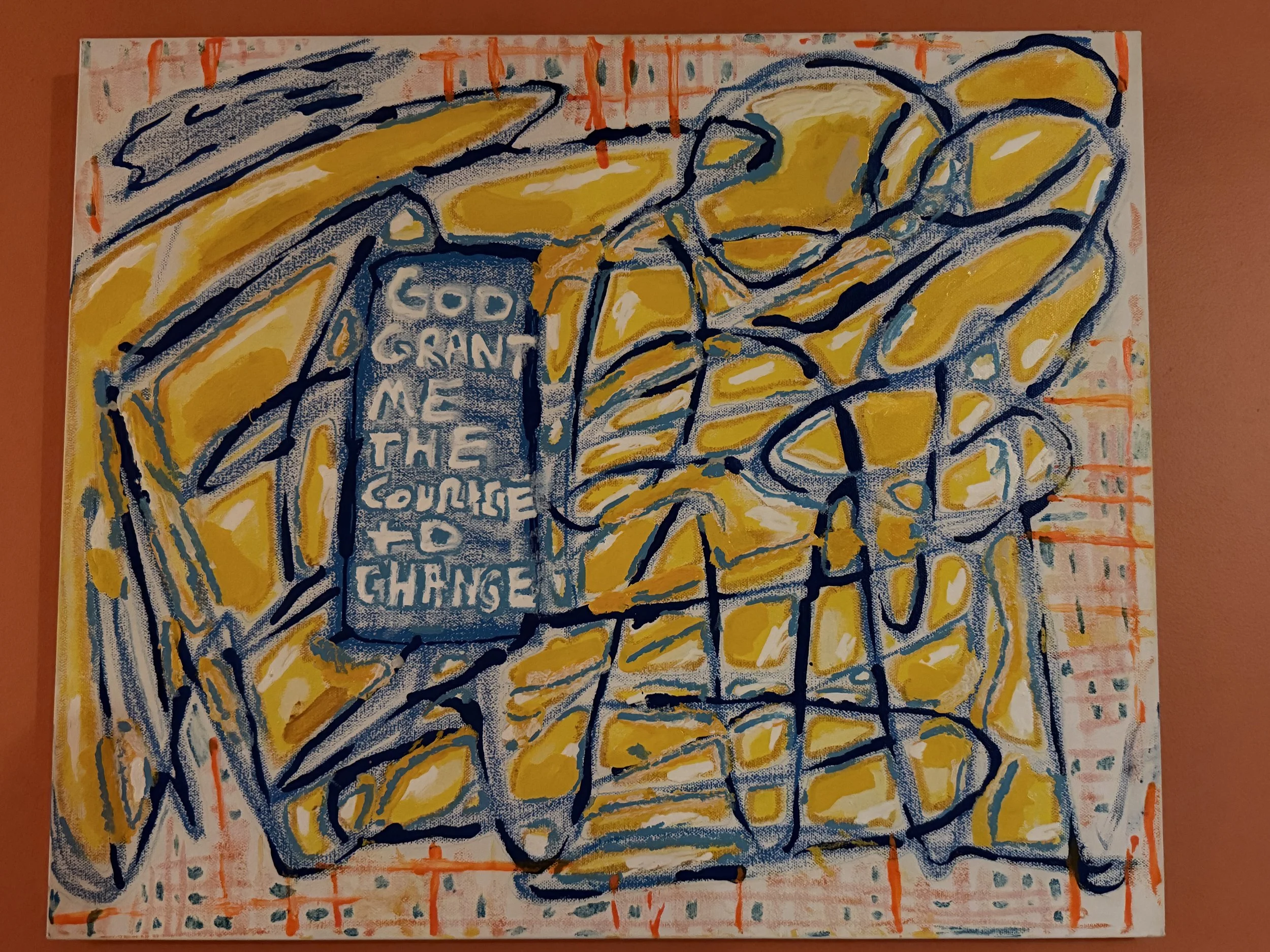
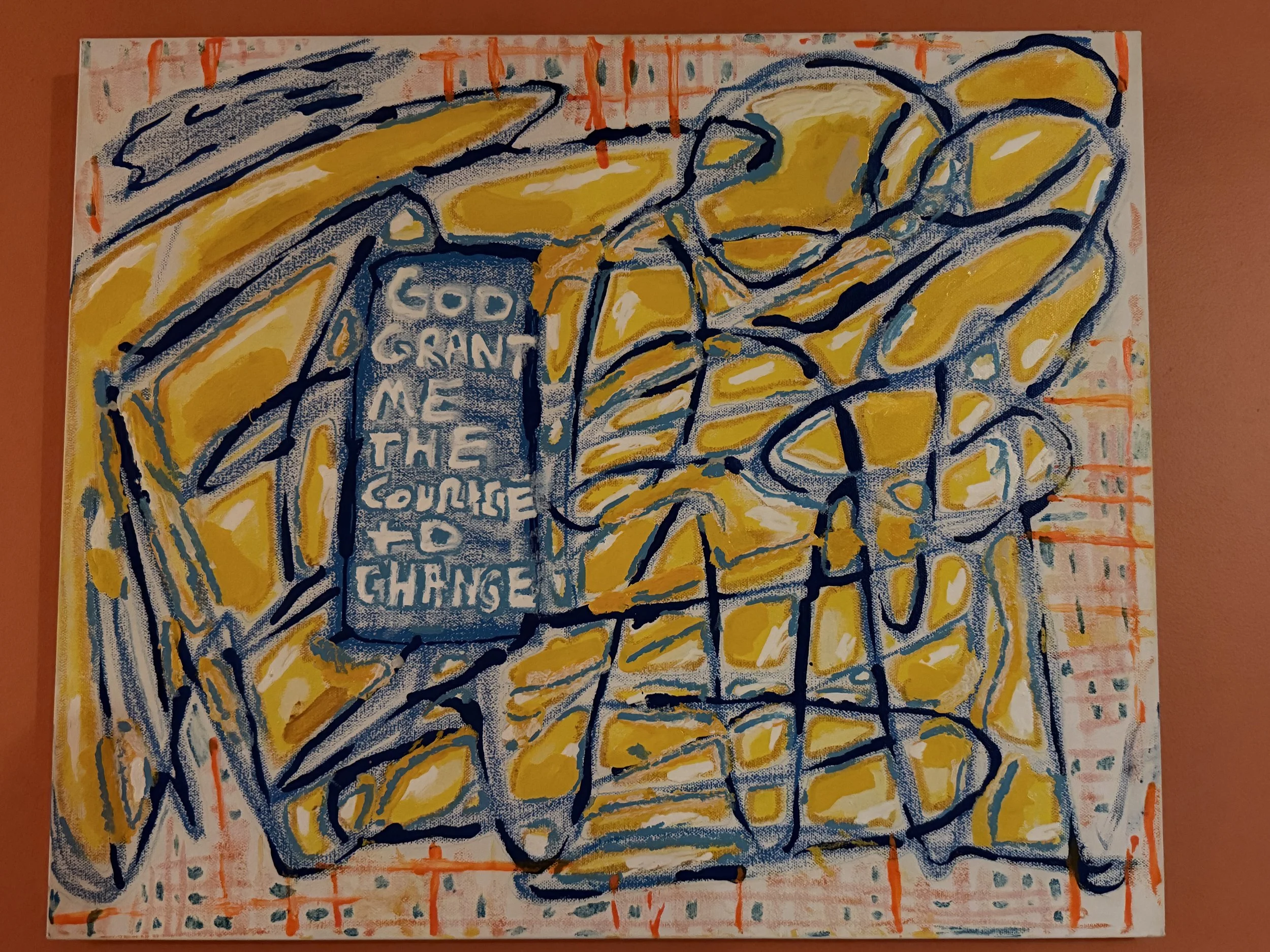
Acrylic on canvas 18x24 Inches NYC Feb-March 2021

Abstract painting with yellow, blue, and orange strokes. Contains a blue rectangle with the text, 'GOD GRANT ME THE COURAGE TO CHANGE'.
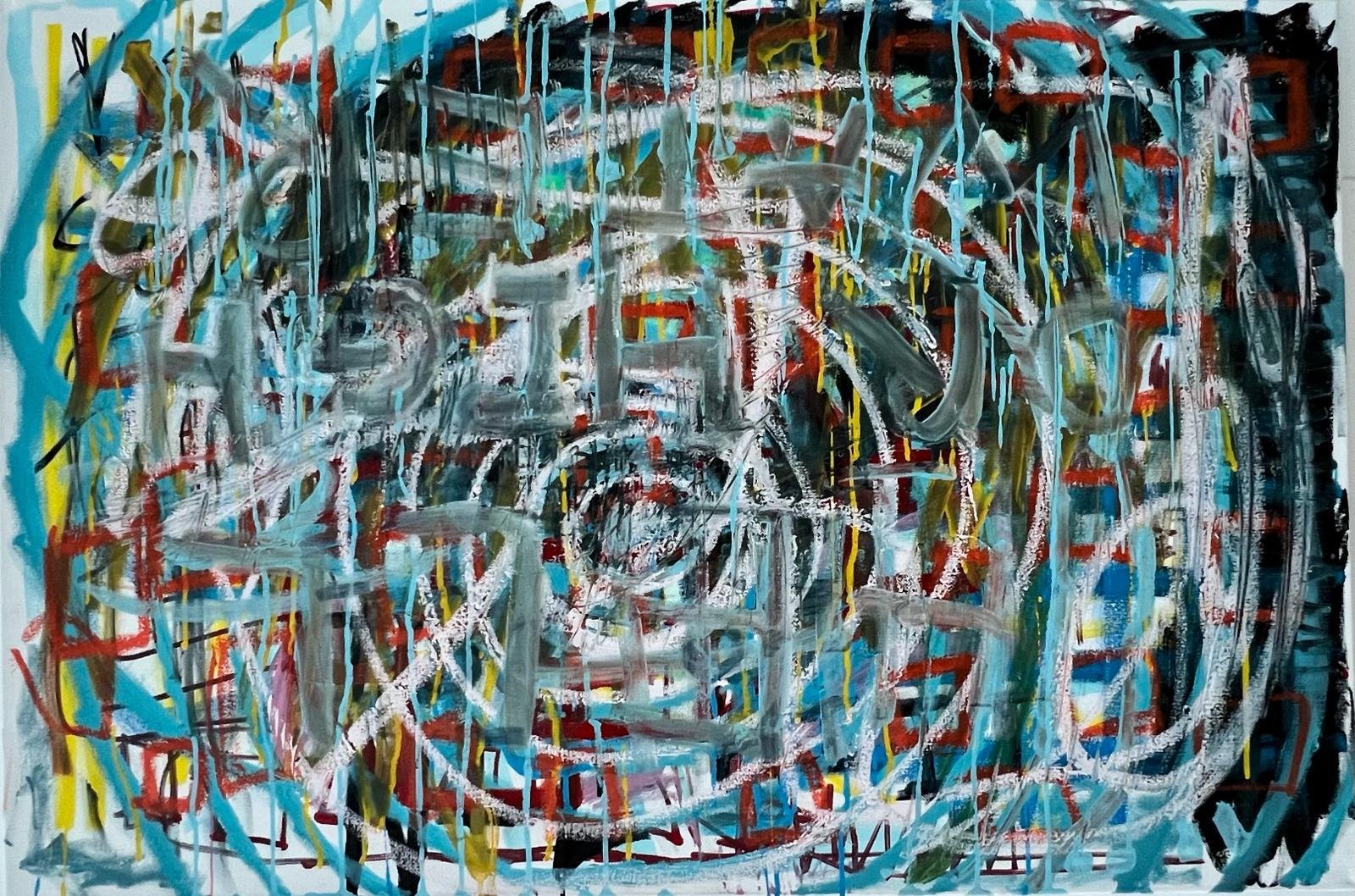
Abstract expressionist painting with chaotic, overlapping streaks of black, white, red, yellow, and blue paint, creating a complex layered composition.

Abstract drawing featuring rectangular and square shapes in red, yellow, and black ink on textured white paper with some handwritten notes and signature.
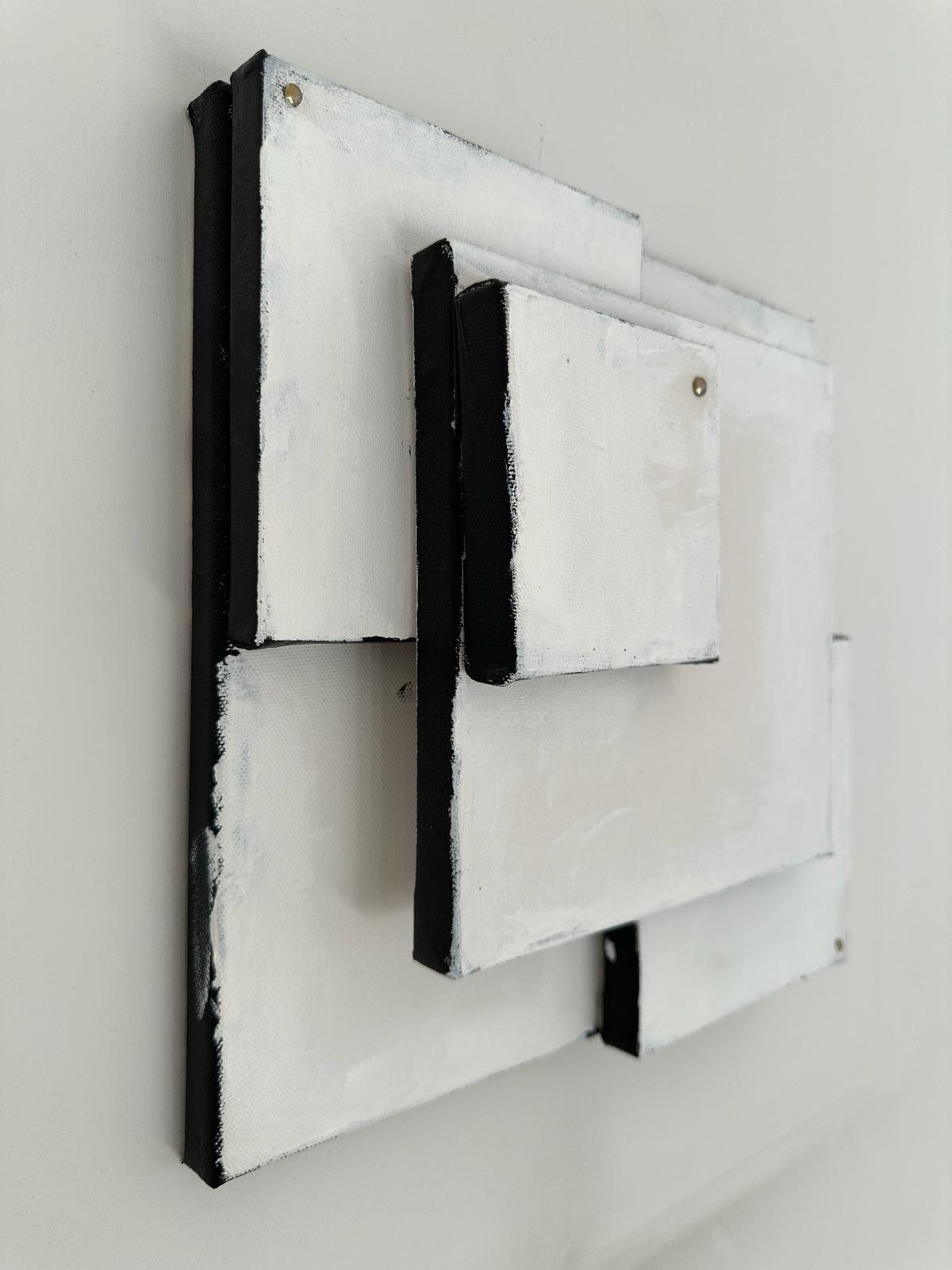
Abstract black and white geometric wall art with rectangular and square shapes mounted on a white wall.
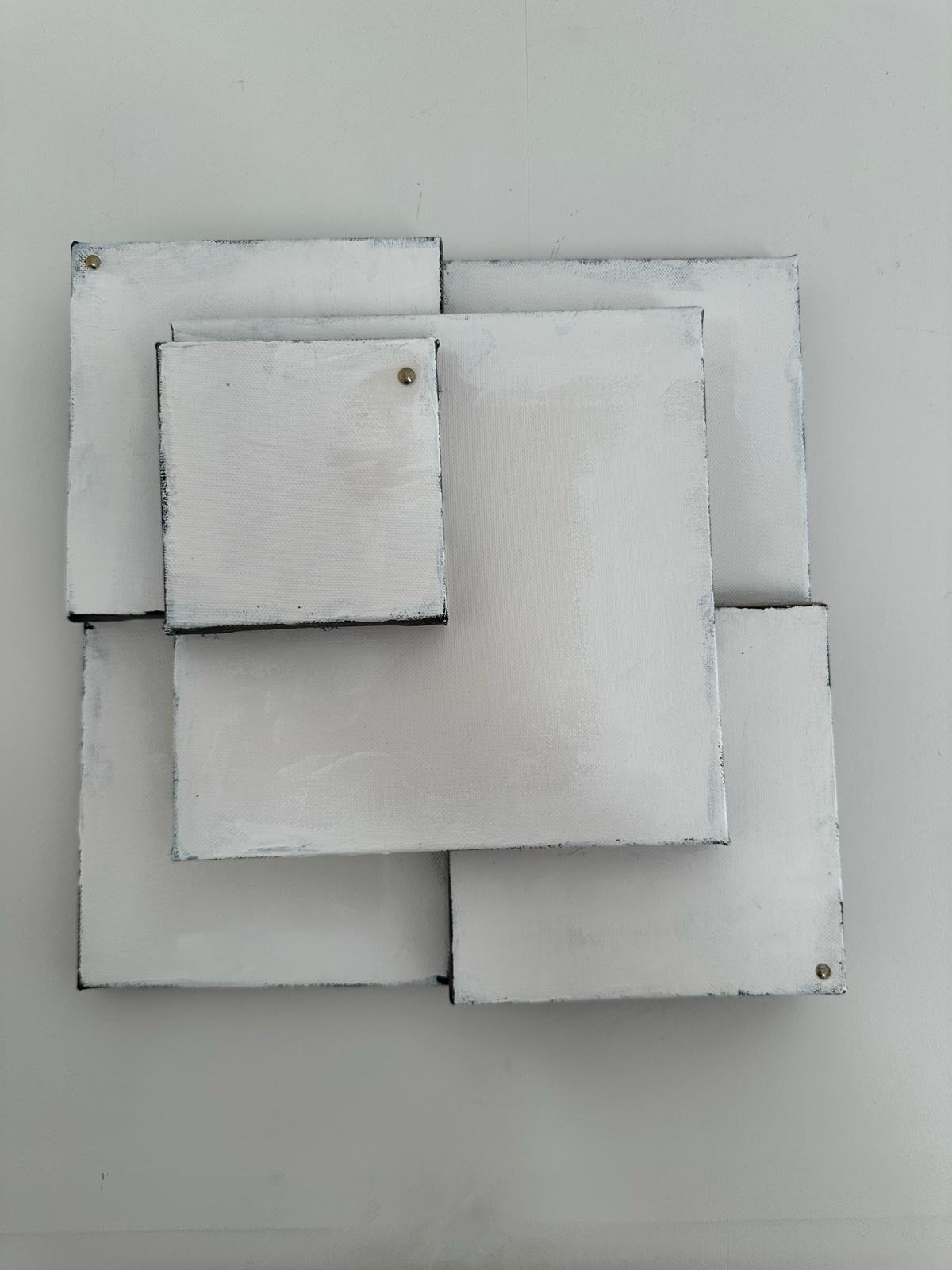
White geometric wall art with overlapping square panels on a white wall.
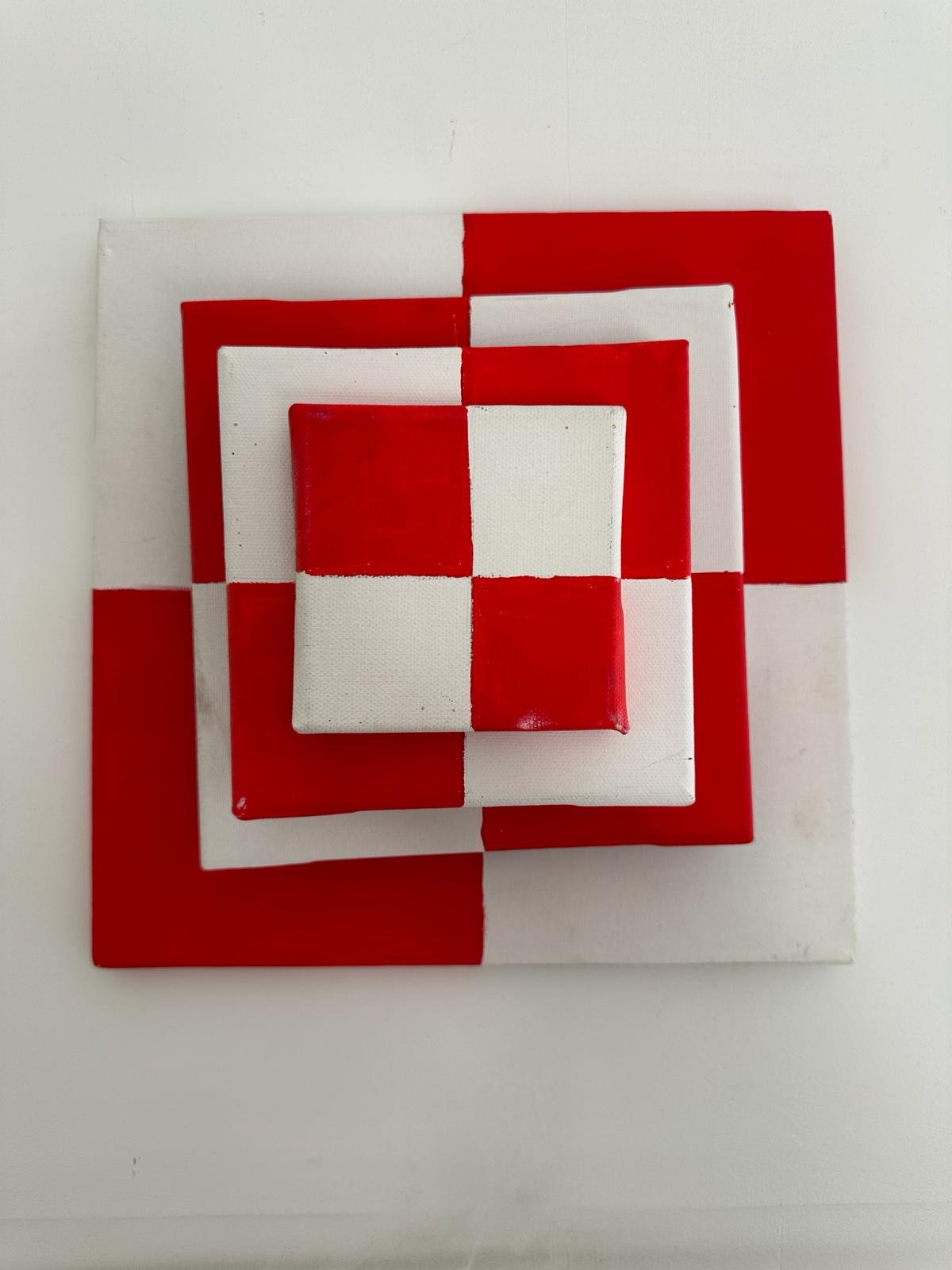
Three layered square artworks with a red and white checkered pattern, arranged from largest to smallest on a white background.
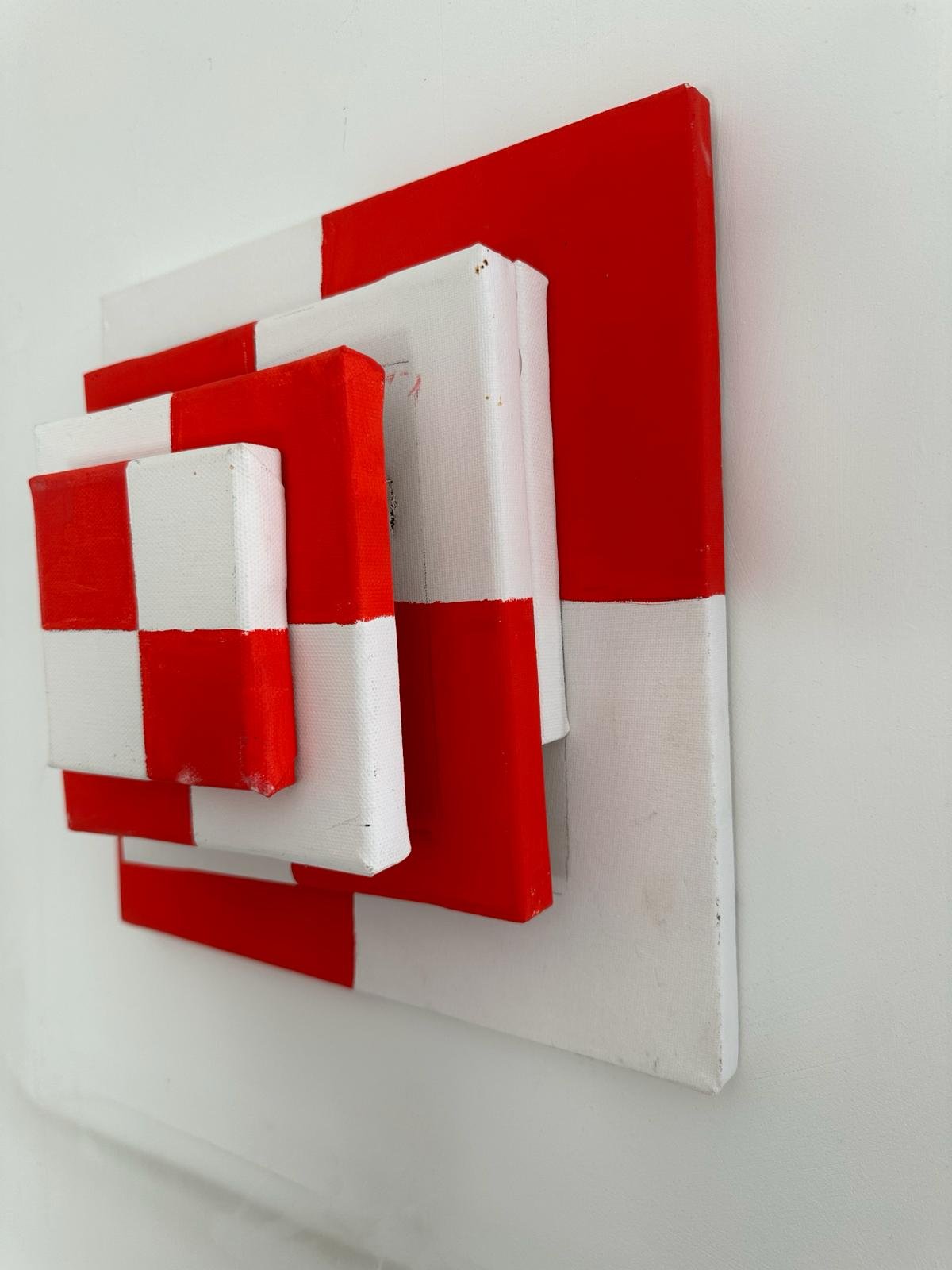
3D wall art with red and white checkerboard pattern, featuring layered rectangular forms on a white wall.
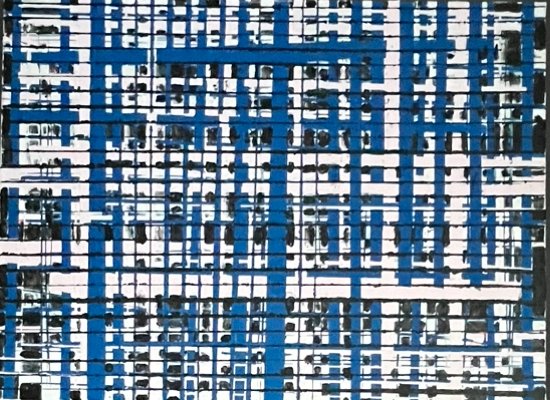
Abstract geometric pattern with blue, black, and white lines and shapes.

Abstract artwork with black brushstrokes on a white background, divided into vertical sections by white lines, with red circular marks overlapping some sections.

Abstract geometric artwork with black and white checkered background and colorful shapes in red, green, yellow, and blue.
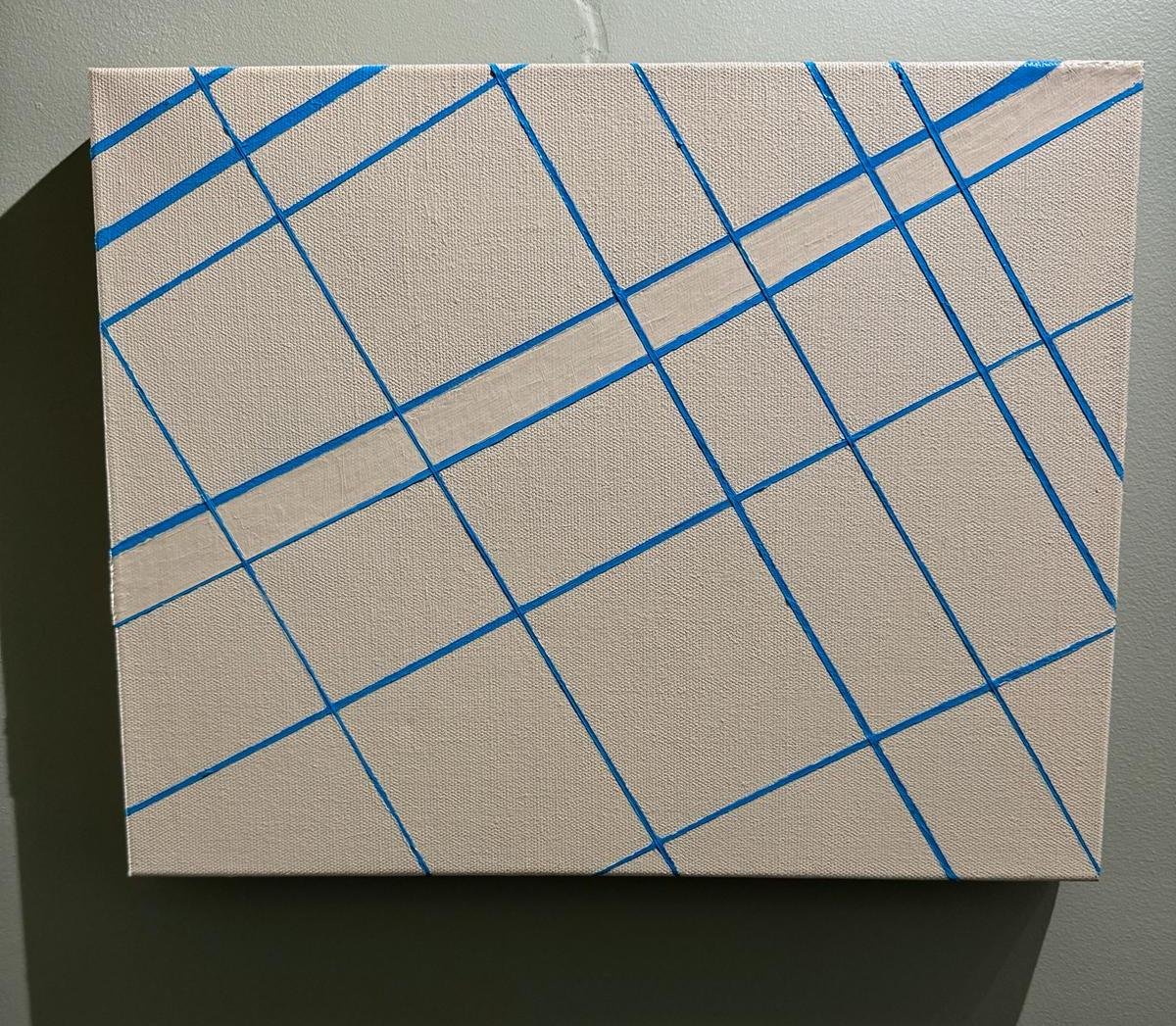
Abstract painting with beige background and blue intersecting diagonal and horizontal lines.

2010

2011